Six buildings from around the globe setting industry standards

Six buildings from around the globe setting industry standards

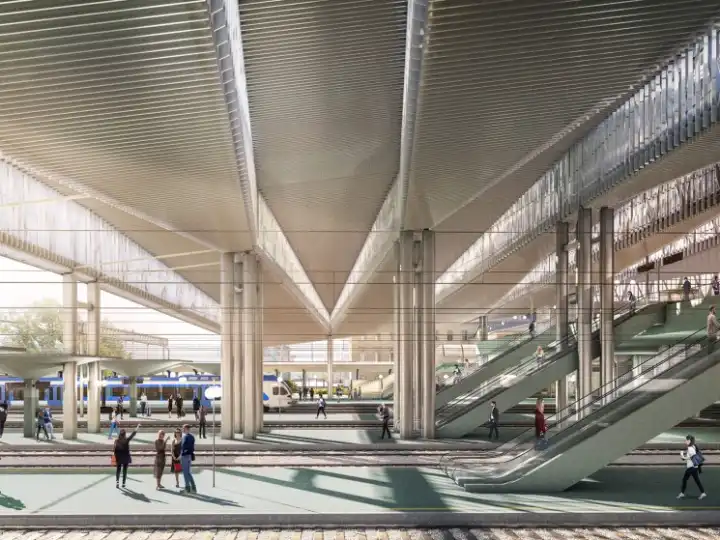
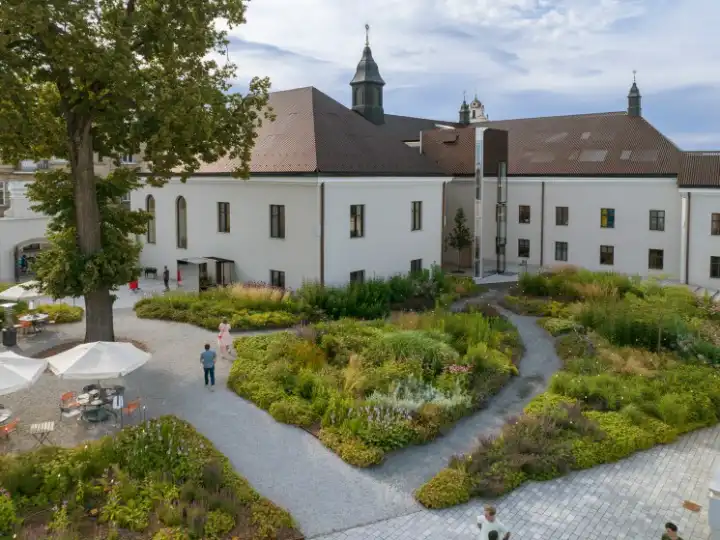
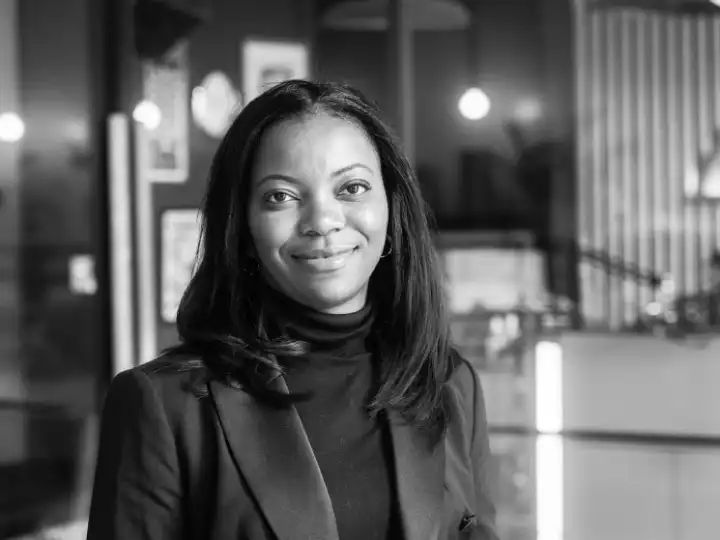
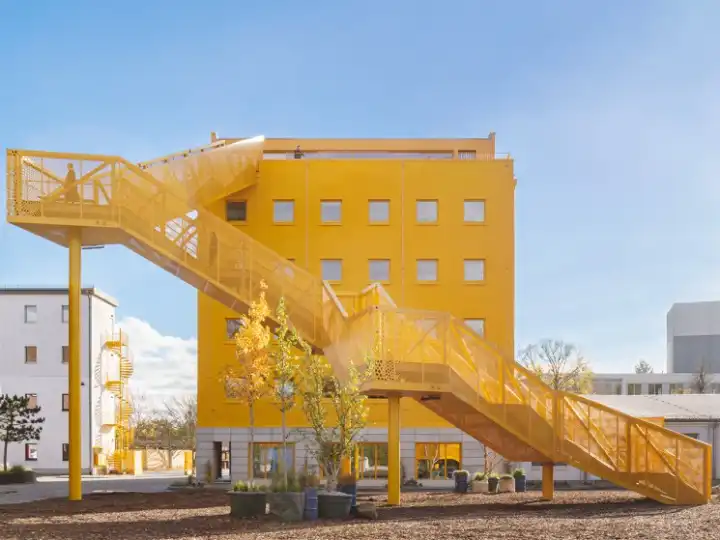
From São Paulo to Tokyo, these six projects are setting a benchmark for developers. It can be easy to focus on the bottom line over the quality of the build but the two go hand in hand: smart design can ensure the longevity of a project, making it a smart investment.best for heritage restorationBoksto SkverasVilnius, LithuaniaIt’s rare for developers to give architects the time and budget that a large-scale project requires. But Boksto 6, a mixed-use development in Vilnius, is one such case. Here, London-based architecture firm Studio Seilern was able to sensitively restore six buildings in the old town over the course of a decade. The original site had been derelict since the 1990s, when it was purchased in 2008 by Lithuanian retail entrepreneurs the Oritz brothers.Vilnius is a Unesco World Heritage site so Studio Seilern – led by the firm’s founder Christina Seilern – needed local authorities to sign off on every detail. The first phase consisted of an archaeological excavation that lasted seven years. Layers of architectural styles spanning 500 years – from Gothic vaults to Baroque structures – were revealed, as well as the evolving function of the site; over the years it has served as a chapel and a hospital. Deep foundations Boksto 6 owes its looks in part to the 500-year heritage uncovered by architects Studio Seilern during its initial work on the project.This provided Studio Seilern with a visual language for the project, which consists of private residences and offices but also a health club and spa, a restaurant, chapel and performance space across the six buildings organised around a central courtyard. “We were fascinated by the history,” says Seilern. “We also took inspiration from the Alhambra in Spain, with polished steel insertions that mimic reflective pools.”Since opening in 2022, Boksto 6 has reinvigorated a parcel of Vilnius’s city centre, sparking a wave of regeneration. How about that for a measure of a property development’s success?studioseilern.combest for apartment livingOnze22São Paulo, BrazilCompleted in 2023 and towering above São Paulo’s tree canopy, it’s hard to miss apartment block Onze22. This product of Franco-Brazilian studio Triptyque Architecture was built by overlapping suspended slabs of concrete in a style reminiscent of early Brazilian modernist architecture. It is in the city’s Vila Madalena neighbourhood, its floor-to-ceiling windows and translucent façades offering residents a panorama of the cityscape from every natural-light-flooded apartment. For Triptyque’s co-founder, Guillaume Sibaud, Onze22 was a chance to explore how to integrate the natural environment in an urban building. “We’re in an urban area but Vila Madalena is a place characterised by lots of vegetation,” says Sibaud. “It was about inserting the building in that soil and letting nature move through it.”High water markOnze22’s rooftop pool is just one of the development’s communal spaces that blend the shared and private realms to create its sense of a ‘grand house’.Triptyque was established by a group of French and Brazilian associates in 2000 and is made up of two studios: one in Paris and one in São Paulo. The resulting back and forth between France and Brazil inspires the studio to experiment with different traditions. “Brazilian architecture has pushed the principles of modernism to the limits, composing spaces horizontally with slabs that allow movement without obstacles,” adds Sibaud. “Onze22 is really in line with this tradition”.In addition to paying homage to the country’s architectural heritage, the structure also carefully strikes the balance between public and private space – an essential trait in any multi-residential structure – with the building set on pillars, elevating the ground floor apartments to ensure privacy. This sense of seclusion is enhanced by verdant gardens at the base, which provide screening from passersby. In addition to being able to wander through the gardens, residents can also enjoy communal amenities, from workspaces to a gym and rooftop pool. The result is a building whose tenants feel as though they are living in a grand house rather than an apartment – a key ambition in Triptyque Architecture’s work. “Giving house-like qualities to apartments keeps cities attractive, as dense but enjoyable spaces,” says Sibaud.triptyque.combest mixed-use developmentMercadoGroningen, The NetherlandsFor many years, Rode Weeshuistraat, a street running through the Dutch city of Groningen’s northern quarter, languished in the shadows of the warehouses and shops that backed onto it. It’s a situation that Dutch developers MWPO and Beauvast have addressed, commissioning architects De Zwarte Hond and Loer Architecten to let light and life back into the city with the construction of a new building, Mercado, in 2023.“We were working with a difficult legacy at the start,” says Frank Loer, founder of Loer Architecten. “Over the years, the warehouses in the centre of the city had become empty and unused, leaving the heart of Groningen full of vacant buildings. This applied to Rode Weeshuistraat in particular. We knew we had to transform the street.”Mercado’s graduated, stepped exteriorGreenery softens the outdoor spacesInside one of Mercado’s 41 apartmentsWorking in collaboration, De Zwarte Hond and Loer Architecten set out to make their vision a reality. Step one was to demolish a building used for storage, before opening a new square and constructing the mixed-use structure. “We worked with the council to develop a narrative for the area centred around walking,” says Henk Stadens, partner at De Zwarte Hond. Keeping pedestrians and businesses in mind, Stadens, Loer and their teams brought together a mix of retail spaces on the ground floor of Mercado with 41 apartments built on the levels above.Lush greenery overhangs the building’s boundaries, animating its exterior, while its stepped form means that it doesn’t overwhelm the street. “One thing we’ve noticed people appreciate about the building is its sense of generosity,” says Stadens. “The richness of the building, with its vegetation, the texture of its ceramic tiling and the variation in height captivates people. Often their reaction is just to come up to Mercado to touch it.”Loer and Stadens are clear that the way for cities to develop isn’t to invest in sprawl but to look for density. “In many ways, urbanism comes above architecture for us,” says Loer. “If you want to change a city, it’s important to consider public space. Then you can think of buildings as actors in your quest to create those conversations and interactions.”loerarchitecten.com; dezwartehond.nlQ&A: Muyiwa OkiThinking bigRiba President Muyiwa Oki is an architect at construction consultancy Mace Group.When Nigeria-born Muyiwa Oki assumed the mantle of president of the Royal Institute of British Architects (Riba) in 2023, he made history, not just as the institute’s first black president but also as its youngest. His election was built on a campaign that aimed to, in his words, “have the voices of younger, emerging practitioners heard”. It’s an aim he is furthering at Mipim, as one of the jury members of its Challengers programme: an initiative that invites 16 young real-estate professionals to share visions for how to build a better world. Why get involved in a programme championing the perspectives of young people in property?A key part of my work at Riba has been giving a platform for younger people to share perspectives on key issues in the built environment. That’s what I’m trying to do with the Challengers programme, in which young people write an essay suggesting solutions to the big issues – such as climate change or urban regeneration – and present at Mipim. We had more than 100 entrants from across the globe and selected 16 of them. Some of the ideas aren’t necessarily new but they’re left in the university curricula and aren’t broadcast to a wider audience, such as urban farming and how it could work in places like South America. Our hope is that people at Mipim see these as solutions to real-life problems and don’t stick to the status quo.Why is it important to look for more of these radical solutions?People are aware that the real estate, building and construction industry has an effect on the environment. About 40 per cent of global greenhouse-gas emissions come from construction. We want everyone to live as long as possible in prosperous communities, so we need solutions like these.What are some of the steps we can take?It’s about considering the notion of the triple bottom line: people, planet, profit. That has become common knowledge, so now it’s about how to make this happen – and do so in a sustainable way.best cultural developmentHaus 1 at Atelier GardensBerlin, Germany“It’s a modest paint job,” says Jacob van Rijs, partner at Rotterdam-based architecture firm MVRDV. That is one way to characterise Haus 1, an eye-catching architectural addition to an industrial area in the south of Berlin. It has been given an upgrade and finished in sunshine yellow paint.Step by stepBy taking things slowly and involving the local community, developers Fabrix won over what can be a tricky city to build in.Haus 1 is part of Atelier Gardens, a redevelopment of Berliner Union Film Ateliers (Bufa), the vast studios dating back to 1912 when Germany’s film industry was booming. In 2019, London-based developer Fabrix bought the site and commissioned a masterplan from Dutch studio MVRDV. Berlin is not known for welcoming foreign developers but Atelier Gardens has been met with enthusiasm. It hosts film festivals and launch parties, and thanks to means-tested rents, there is a diverse mix of tenants, from tech companies to micro-farming collectives. Fabrix also involved local stakeholders from the start. “We didn’t just show up with plans,” says its CEO, Clive Nichol. “We spent three years talking.” Haus 1 is proof that a grassroots approach can make even daring transformation easy.mvrdv.combest for the elderlyCharm Premier Grand nursing homeTokyo, JapanWith nearly a third of its population of 125 million now over 65, Japan is leading the way in thinking about how best to meet the diverse needs of its senior citizens. Nikken Housing System, a Tokyo design and consultancy practice, specialises in the subject: it recently won the gold medal for residential projects at the Mipim Asia Awards, for the second phase of an upmarket nursing home in Tokyo it built with Mitsubishi Estate Residence.With its balconies, picture windows and sleek wooden louvres, it’s apparent that Charm Premier Grand Gotenyama Nibankan is unlike most facilities for the elderly. “The feeling of ‘home’ can get lost amid the handrails and corner guards of nursing homes,” says architect Masahiro Suzaki, general manager of the design team at Nikken Housing System. There are double rooms for couples, cypress and stone baths, a premium food menu and 24-hour nursing. Other services include a concierge, yoga classes and dog therapy. The nursing home, in the leafy neighbourhood of Gotenyama, has 37 rooms that can be adapted to residents’ needs, with bathrooms and kitchens for those who want to live more independently. “We’ve tried to create an environment where residents can move in without feeling a major shift in their lifestyles,” says Suzaki. The design also allows for changes as care progresses and takes in the needs of nurses and wheelchair users. The dining room and lounge can be accessed from the street so that residents can come and go as they please and air circulates through open corridors, giving the interior a sense of the outdoors. While the home would be too high-end for many, the ideas here could be adapted to different settings. “Architecture can improve quality of life for the elderly,” says Suzaki.charmcc.jpbest for social housingSunflower HousesVienna, AustriaFor a fresh look at social housing, take a stroll through Sonnenblumenhäuser (German for Sunflower Houses) in Vienna. Part of the Wildgarten, a new residential neighbourhood in the city’s southwestern suburbs, it features 82 housing units across 11 buildings. Austrian Real Estate (ARE), the landowner, commissioned Madrid-based architecture firm Arenas Basabe Palacios for the project, which also features community spaces, shared bike-parking facilities and ground-floor commercial units.“The construction is the opposite of typical, conventional solutions for suburban environments,” says architect Luis Palacios Labrador of Arenas Basabe Palacios. “It follows neither the model of a garden city nor that of a single-function development of blocks.” The buildings have yellow, white or wood-clad exteriors, with south-oriented living spaces that open towards private gardens. A low-maintenance green space known as the Allmende(common land) adds to the community feel. The buildings vary in height and type, with small ones containing single-family and duplex housing mixed with larger structures of apartments. This ensures that all the interior rooms receive sunlight and shows that social housing need not be drab or overly uniform.“It follows neither the model of a garden city nor that of a single-function development of blocks”The decision to design buildings on different scales has implications beyond the Sonnenblumenhäuser: it provides a model for a variety of investors to get involved, from developers who can create smaller buildings and medium-sizedBaugruppen(co-living and co-housing projects) to the city council providing the backing for the largest blocks. “In this way, we open up the forming of the city to a more inclusive process, where all these agents are represented,” says Palacios Labrador.arenasbasabepalacios.com

Editor’s letter: Andrew Tuck talks going on with the show

Editor’s letter: Andrew Tuck talks going on with the show

Monocle has always had a penchant for a good trade fair. Enter the halls of convention centres across the world and you are suddenly immersed into the lives of coffee traders, bathroom-equipment manufacturers, textile brands or motor manufacturers. While some events come and go from our schedule, many of these gatherings remain annual fixtures on our editorial calendar. One of these is Mipim, the world’s most important property and real estate event. The marché international des professionnels de l’immobilier (hence why they call it Mipim) has been running since 1990 and has an attractive home, the Palais des Festivals in Cannes (the venue that also hosts the town’s famous film festival).But it’s not just the chance to be in the south of France that pulls us in. As you walk the halls, track down people for interviews and off-the-record briefings, you build a detailed map of which cities and nations are on the move – often upwards with the help of skyline-defining edifices – and where’s struggling. But you also get a sense of social trends – is office life truly doomed or just transforming? Do people feel secure and welcome in the cities where they live? If not, why? And you can also spot who’s really investing in sustainability, in beauty, in liveability; and who the sharks are. We’ll be heading back there in March, finding the stories that we think you should know about and tracking down the people we should all be listening to.But why wait until then? For this issue of Monocle, we have hit the streets in cities from São Paulo to Copenhagen to meet the developers, foundations, builders and co-operatives that we think are doing some good. People and organisations that are looking beyond pure profit to deliver care homes where the elderly are embraced by architecture, offices where people find collaboration and consensus easy to achieve, buildings that have been adapted for re-use with élan. It’s a realm that we should all take an interest in – the world of property and development can make or break a neighbourhood and shape our lives for the better or for the worse.As part of the report, I met architect Guillermo Reynés of gras Reynés Arquitectos in Palma de Mallorca to see through his eyes a project that he has delivered for the Fluxà family, founders of Camper shoes among other things. It’s a series of seven buildings built around a busy intersection of roads in the El Terreno neighbourhood, once the happening heart of nightlife but in recent years down on its luck. Client and architect have come together to create a series of buildings that contain homes to rent, a café to linger in, offices, a flower shop, a bakery and a supermarket – all in a rich array of colours and materials. As with many of the people we interviewed, both Reynés and Miguel Fluxà, CEO of Camper, spoke less about profit (they could have just lobbied for another hotel) than about giving back to a city they care about.One country that seems to be hiring ever bigger booths and stands at trade fairs is Poland. In sectors from finance to medicine, architecture and, yes, property, Poland is playing an ever-more important role. But there’s one trade where its rise is truly astonishing: furniture manufacturing. Flatpack masters and high-end brands have all been coming to the country to have products expertly made. Poland is now one of the world’s top-three furniture exporters. This month,our Expotrundles through snowy forests and into hi-tech factories as we grasp what’s been happening.We also meet the conscripts in the Lithuanian army, discover the most covetable collection of graphic design for sale, see how France intends to keep crowds at the Olympic Games safe and meet the chefs who cook for presidents and kings.Some different house news. We have a lot of projects and plans in play for 2024: expect more physical Monocle spaces, new books, a digital initiative and plenty of events. The first of these is an outing for The Chiefs, the event where we ask leaders in numerous fields to tell us their stories, reveal their tips for success. It’s in Hong Kong on Wednesday 27 and Thursday 28 March. Come. We’d love to see you. We might even check out some real estate.Please feel free to send suggestions, tips and perspectives. You’ll find me atat@monocle.com.Illustrator:Motiejus Vaura

Bang & Olufsen is bringing back a beloved CD player

Bang & Olufsen is bringing back a beloved CD player

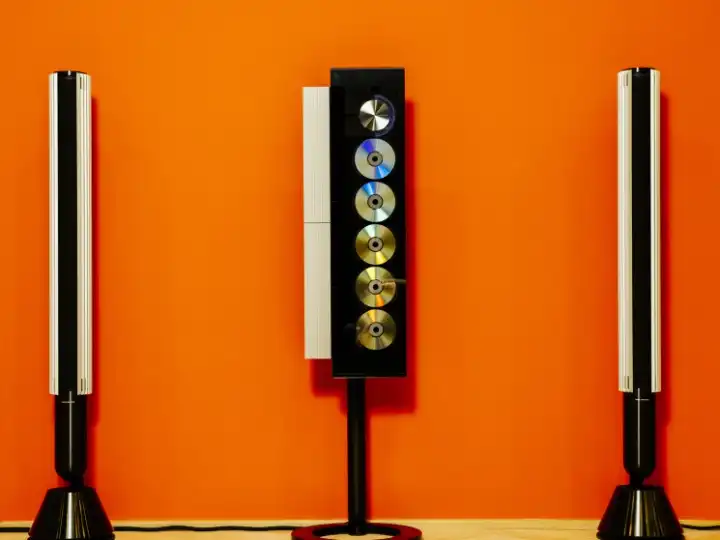
Built-in obsolescence in technology products is an open secret. As companies include mechanisms designed to feel antiquated just in time for their next release, consumers are left to reckon with the issue – and pick up the tab. In 2023, the UN estimated that individuals produce about 8kg of electronics waste every year, equating to 61.3 million tonnes of discarded computers, phones, cables, batteries and televisions worldwide.“If we continue to operate the industry in the same way, we’ll have a huge problem,” says Mads Kogsgaard Hansen, head of product circularity and portfolio planning at Bang&Olufsen (this portfolio stretches back almost a century to when the company was founded, in 1925). “We use too many materials for too short a lifespan, motivating consumers to replace their devices early without any concrete reasons. The consequence is the waste being generated and [we need to consider] how to handle the substance of the waste.”Tiina Karjalainen Kierysch, head of design at Bang&OlufsenMads Kogsgaard Hansen with a Beosound 9000It’s a windy day in Struer, on the Danish peninsula of Jutland, and Kogsgaard Hansen is walking Monocle through Bang&Olufsen’s Factory 3. Here, technicians are busy sourcing and taking apart Beosound 9000 CD players, originally designed by the late British industrial designer David Lewis in the 1990s. The Bang&Olufsen team have purchased the CD players from their previous owners to refurbish as part of Kogsgaard Hansen’s Recreated Classics Programme, a project that began in 2020 with the revisiting of the 4000c turntable from 1972; this year, it will release 200 refurbished Beosound 9000c CD players.Considering Lewis’s futuristic-looking design, with its sleek aluminium-and-glass surfaces, it seems anachronistic to watch these devices being painstakingly taken apart, cleaned and fixed by hand. Across the factory floor, boxes brimming with metal parts are carefully organised and stacked. “The refurbished products coming out of the workshop are often better than the new ones because they’ve been reassessed with knowledge that we didn’t have when we first launched them,” adds Kogsgaard Hansen, as he explains that, for example, the laser reader is always replaced during the restoration process as it is the mechanism most likely to be faulty. “We need to make sure that we’re future-proofing as well, so we replace the parts that often have a reduced lifespan or might malfunction down the line. There is a long list of proactive fixes that we can make thanks to the experience that lies in the building and in our team.”Components built to lastDetail of a Beolab 28 speakerTechnological quality speaks volumesErik Vennevold, manager of technical assembly, worked on the original Beosound 9000 in 1996 and has nearly 30 years of experience fixing them. “When we started making the Beosound 9000, it was said that the acceleration of the CD-grabbing mechanism was faster than a Ferrari,” he says, demonstrating how the CD player silently whizzes at speed between the six albums encased in glass. When the technology was first introduced, the idea of seamlessly gliding between different albums and genres was unheard of, a kind of prototype for a shuffle playlist before the age of digital streaming. Today, Vennevold is in charge of passing down his accrued technical know-how to a team of Bang&Olufsen engineers tasked with reassembling the CD players using original equipment from the 1990s that was brought up from storage especially for this project.“Bang&Olufsen has always been challenging the status quo – no one thought that a CD player could look like anything but a black box”After the manual disassembly in Factory 3, the aluminium parts are sent to the nearby Factory 5, where they can be milled, polished and painted black to look as good as new. Often the cabinets show scratches and marks on the panes. For aluminium, this is an easily rectifiable problem but the glass lids, in this instance, are being fitted from new materials so as not to compromise the overall quality of the design. Compared to the rather old-fashioned and analogue craft taking place in Factory 3, Factory 5 is where Japanese robotic arms engage in a hypnoticpas-de-deuxto bend, polish, stretch, press, fold and mill aluminium into the recognisable Bang&Olufsen shapes. The sound of machinery whirring and clanging can be heard as metal is crushed and moulded into shapes of sound systems, speakers and TVs, at times with the help of a press that can exert the weight of 117 tonnes (the equivalent of about 30 Asian elephants). On one side of the cavernous space, rows of metal parts are being dipped into vats of bubbling liquid to achieve the all-important anodising step of manufacturing: the electro-chemical process that creates a scratch-resistant surface.Electronic chip with labyrinthine groovesDecades-old equipment still in useTiina Karjalainen Kierysch, Bang&Olufsen’s head of design, joins monocle for this section of the tour. Despite being based in Copenhagen, Karjalainen Kierysch makes the four-hour train journey to Struer to visit the factories frequently. “It’s nice to be more hands-on because many of the prototypes are perfected here, in dialogue with the factory. Sometimes even a small detail, such as a polished edge, can enhance an object’s desirability,” she says, leading us through the labyrinthine layout and greeting technicians. “From a design point of view, Bang&Olufsen has always been designing the future, challenging the status quo. Before the Beosound 9000, no one thought that a CD player could look like anything but a black box.Mounting aluminium parts for anodisationRefurbished Beosound 9000c from the 1990s (on left) with 21st-century Beolab 28 speakerAs we leave the busy factory floor, it’s time to see the refurbished Beosound 9000c in action. The CD player is placed on a matching black aluminium footstand, in tandem with a pair of Beolab 28 speakers from the 2020s that can be wirelessly paired to the CD player. Through refurbishment and the addition of a Beoconnect Encore converter box, 21st-century advances can be introduced to a design from the 1990s, a compelling manipulation of time and the linear progress of technological knowledge. “All of us on the design team were reluctant to change it too much because we liked the brutalism of the simple lines. There’s everything you need and nothing you don’t,” says Karjalainen Kierysch. “So for this recreated version, we kept the integrity of the lines and the materials but we inverted the colours by reanodising the aluminium parts in black.”As the Beosound 9000c stands proud, its Lewis design looks as futuristic and slick as ever, with its six CDs on display to offer a glimpse of its owner’s musical taste, be it 1950s Ethiopian jazz or 1990s grunge. As a design, it’s a sculptural piece capable of commanding attention in any space. As a piece of technology, it provides an opportunity to dig out old CDs and engage in a more ritualistic approach to listening to music once more.Polishing also requires some elbow grease“We’re hoping to show that a second life is not a compromise but actually that it is sometimes a more attractive option,” says Kogsgaard Hansen. “We’re trying to demonstrate a different way of thinking about electronics.” This might be more difficult to argue in favour of when it comes to old, broken wired headphones with dated aesthetics but it is certainly an interesting proposition regarding a well-crafted collector’s item from the 1990s. Perhaps, then, the only cure to obsolescence is simple design that transcends time. Ready for a revival?Here three more Bang&Olufsen designs that we would love to see come out of the archive:1. Hyperbo 5 RG SteelThe Bauhaus-inspired 1934 design is a compelling early example of sound-as-furniture.2. Beovision Capri TVA 1959 television set on teak wood legs, inspired by Danish modernism.3. Beocom 6000Designed in 1998 by Henrik Sørig Thomsen, this telephone makes a stylish case for having a landline.

The best technology for your travels

The best technology for your travels

1.Pocket CableNative UnionThe new cable from Native Union is superbly pocketable and designed to avoid tangling. It has USB-C connectors at each end of its 17cm cable, with both able to fold back into the case for tidiness. It’s capable of supporting strong charge levels, so it’s compatible with laptops as well as phones. Get it in one of five colours, including an eye-catching bright orange.nativeunion.com2.Soundlink MaxBoseThe new Bose speaker is small enough to pack in your carry-on but sounds huge. Rugged enough to resist shocks, water and dust, it boasts a rope handle that can be swapped out for a shoulder-length strap for further versatility. The battery lasts for 20 hours and the speaker can even charge your phone while playing audio.bose.com3.Galaxy Fold 6SamsungLeave your tablet at home and take this instead. The new Samsung folds out to a bright and attractive 7.6-inch display with a centre crease that’s now near-invisible in use. An improved camera system, fast processor and larger external display add to the appeal, even if it’s still a little thick when folded.samsung.com4.Tracking CardNomadThe new Nomad tracker will help should you ever lose your wallet or have it stolen. It uses Apple’s Find My system, which means it sends a silent message to any passing Apple device when marked as lost, with its location then securely relayed to your own chosen device. Barely bigger than a bank card, it can be charged via any MagSafe charging pad, making its integration into daily life a breeze.nomadgoods.comIllustrations: Yusuke Saitoh

Plaza Gomila – the colourful construction reviving the former beating heart of Palma de Mallorca

Plaza Gomila – the colourful construction reviving the former beating heart of Palma de Mallorca

The neighbourhood of El Terreno, especially its epicentre at Plaza Gomila, was once the beating heart of nightlife in Palma de Mallorca. In the 1960s and 1970s it had a joyful, sunny disposition that pulled in visitors and performers alike: Jimi Hendrix and Tom Jones are both reputed to have strutted their stuff here (not together, mind). But then, as mass tourism boomed, a wall of hotels rose ever higher along the Paseo Maritimo, the boulevard that divides the district from the sea, creating a barrier that denuded the views, killed the vibe and pushed people away from the El Terreno strip. Clubs got tackier, bars closed, drug dealing became commonplace. Today? It’s reclaiming its old spirit, in part thanks to the island’s Fluxà family, the owners of the Camper shoe business.Striking graphicsMiguel Fluxà is a fourth-generation member of the Camper business. Now, along with his wider family and the foundations that they run, he is the developer of a standout project at Plaza Gomila, a point where several roads intersect. Designed by local firm Gras Reynés Arquitectos and MVRDV from the Netherlands (the in-demand Guillermo Reynés once worked for the Dutch studio, hence the connection), it’s a series of seven buildings, all in different hues and materials (from tile façades by Mallorca-brand Huguet to locally made pressed-earth bricks) and with varied roof lines to keep things interesting.Colour-coded streetscapeBrutus restaurantOffice for Gras Reynés ArquitectosThis dazzling intervention of reformed buildings (including one of the island’s first brutalist blocks, now painted dazzling white) and newly built elements is a miniature town in itself, with homes to rent, a supermarket, flower shop, café, restaurant, a just-added bakery and offices for Gras Reynés Arquitectos.Bakery designed by Jasper MorrisonFluxà explains the family’s motivation. “Tourism [on the island] started here; singers and celebrities used to come here,” he says. “It’s part of the history. We thought that it was possible to revive the neighbourhood – to make it more like it was and do something good for the city.” Fluxà says that the project has also demanded flexibility and an acceptance that when you have seven buildings to develop, you have to wait to see where it leads. In terms of motivation, he’s wary of using the “legacy” word. “I don’t care whether people know that we’re involved. We are just giving something back to where we come from.”Guillermo ReynésReformed brutalist buildingMonocle tours the project with Guillermo Reynés, who arrives on his bicycle – a mode of transport that matches the project’s success in being designed to Passive House standards, employing cross winds and external blinds to keep rooms cool and shaded. Reynés explains the colours that punctuate the scheme – a nod, he says, to the Mediterranean location and a neighbourhood that’s equally colourful. He also reveals his deep connection to the area: not only does he have a home nearby; he came here to party as a young man, in the very building that now hosts his offices.Saw-toothed and Huguet tilesThe developer and architects have changed the course of the down-on-its-luck plaza and have created something that serves the people of El Terreno. And while the economics are, of course, a key consideration, it is also clear that all involved want to do something to aid their hometown. To make a difference.Great expectations The project is pulling in many new businesses and now other architects and developers are bringing abandoned buildings back to life. And new nightlife players have arrived, such as an outpost of the upscale Lio cabaret club. But opportunities remain for people wanting to be part of a community making a shift in fortunes for El Terreno.

From car to chopper

From car to chopper

It’s a warm July afternoon and the rotor blades of a canary-yellow Airbus H135 helicopter are turning lazily on the roof of the ÖAMTC headquarters in eastern Vienna. In the near distance, the radar atop the city’s international airport’s air-traffic-control tower seems to mirror their movement. Then, suddenly, as if the wind has just picked up with furious haste, the blades whizz into action, propelling the helicopter up into the clear blue sky, leaving a burst of downwash in its wake.The ÖAMTC (Der Österreichische Automobil, Motorrad und Touringclub) was founded in 1946 as an automobile and motorcycle club serving the burgeoning numbers of Austrian car owners. For decades it mostly provided breakdown cover but, in recent years, as a future without internal combustion engine (ICE) vehicles has become ever more likely, the ÖAMTC has undergone a reinvention. Today it is a one-stop shop for all things mobility. It still provides its members with roadside assistance but is also branching out into, among other things, travel and tourism. Its glassy, ufo-like headquarters in the Austrian capital, which opened in 2017, is meant to symbolise this transition. Perhaps most radically for a motorists’ association, today there are many cyclists among the ÖAMTC’s 2.5 million members who can take advantage of roadside bicycle assistance delivered by mechanics who ride around on electric bikes. On the car side of things, meanwhile, increasing numbers of electric vehicles (EVs) are being serviced, meaning that technicians must be as well versed in the battery-powered as in the ICE.Rescuer Ebner ready for takeoffEbner (on left) and Captain Robert GallmayerCommand room shelf, with a statuette of St Christopher, the patron saint of travellersRear doors of an ÖAMTC Airbus H135Launched in 1983, the association’s air rescue service, which provides medevac assistance across Austria, was the precursor to this diversification. The ÖAMTC has 21 air bases across the country, with a 31-strong fleet of Airbus H135s. The upkeep of these €7m aircraft is financed partly through ÖAMTC membership fees and partly through government funding and insurance contributions. Though the ÖAMTC is an NGO, it works closely with state and regional authorities, a common practice in Austria and Germany, where clubs and associations (known asVereine) frequently perform critical state-adjacent duties.Co-ordinating the ÖAMTC’s air-rescue operations is CEO Marco Trefanitz, a cool-as-a-cucumber former telecommunications executive, who doesn’t bat an eyelid or raise his voice when the helicopter whisks into action. “The whole system is organised by the state, which runs the dispatch centres in the nine provinces of Austria and sends calls through to us,” says Trefanitz as he invites Monocle to sit down in the rescue team’s helipad-side rest area, which features an array of dumbbells and exercise machines. There is an adjacent kitchen and storage room, as well as a command centre dominated by a large monitor streaming live footage from around the country, alongside real-time weather maps. Long-haired and open-shirted, Trefanitz, who assumed his position in 2012, doesn’t look like the typical Austrian CEO. There’s a bit more pressure in his new job than in his previous one but he insists that it is far more rewarding. “The work here is not about me or shareholder value. Everything we do at the ÖAMTC is about how we can improve to better help our members and our patients.”Tools of the tradeControl panel inside the helicopter cockpitMarco Trefanitz, CEO of ÖAMTC Air RescueAbout five minutes after rushing off, the H135 returns. “Storno,” mouths Captain Robert Gallmayer as he climbs out of the cockpit: “cancelled”. False alarms are routine. About 10 per cent of calls are made as a precaution rather than a necessity, says Gallmayer after the rotors have died down and it’s possible to talk normally again. Often, he is already airborne while the call is still in progress; sometimes, the operator might conclude that ground vehicles are sufficient for the job, which means flying back to base to refuel and await another call. Gallmayer, lead pilot among 13 at the Vienna base (there are 71 across the entire ÖAMTC), has already flown two missions today, a normal number for this time of year as hundreds of thousands of Austrians begin their summer holidays. Both Gallmayer’s earlier missions involved dropping divers into the Danube in search of missing swimmers; one was pulled out alive, while the other sadly could not be found. Another common call requires retrieving someone who has had a stroke or heart attack from a mountainside or forest track. Indeed, car accidents or breakdowns are in the minority, with helicopters only called to the scene when the injured need to be rushed to hospital. During the summer, there are usually about five or six missions a day, and the feedback section of the ÖAMTC air rescue’s website gives heartening indication of how successful these predominately are. Pride of place among the comments and photos is given to a child’s drawing of those famous yellow helicopters. Below it reads, simply, “Thank you for saving us.”Steering committeesAs people diversify the way they travel, car-focused organisations would do well to follow their lead. For the ÖAMTC, what began as a way of helping members has morphed into a vital service.

Ten principles for designing vibrant and liveable mixed-use spaces

Ten principles for designing vibrant and liveable mixed-use spaces

Creating a lively mixed-use development isn’t just about throwing up some buildings and calling it a day. Developers need to make considered decisions to deliver a successful place that matches the ambition of their original architectural renderings. It’s about clever details, an understanding of how people actually use space and meticulous design from choosing the right materials to community-building.This is the art of crafting spaces that not only house but also connect, where tenants – whether residential or commercial – feel a sense of belonging that goes beyond their address. Here, we get into the nitty-gritty of what makes a mixed-use project truly thrive, proving that vibrant developments are built one thoughtful detail at a time.1.Sensory symphonyBuilding with materials that are interesting to look at will lend character to any development. A case in point is the rippled concrete on the façade of architect Lina Ghotmeh’s Stone Garden Housing project in Beirut. Natural, locally sourced options like stone, timber and clay bricks can help imbue a project with a sense of place.2.No blockingAvoid taking up an entire block with a single, impenetrable structure. Instead, invite public life into the development by shrinking building footprints. Create public spaces and thoroughfares for people to cut through the site, improving pedestrian connections. This will prevent a project becoming a dead zone and better embed it in the city.3.Tall orderCap buildings at five storeys. Why? Well, beyond that, according to Danish urbanist Jan Gehl, residents lose their connection to the street. A good rule of thumb is to ensure that people can comfortably call down from a balcony to the footpath. By capping the height, we ensure that the building’s presence doesn’t overwhelm the street or skyline.But this doesn’t mean ignoring the needs of street level. Avoid brash glassy frontages and opt for a façade that has clear windows for passive surveillance. The doorway should be flush with the footpath (stepping up or down creates a physical barrier to entry) with awnings set only a few metres above the ground to offer a sense of cosy enclosure.4.Human scaleUse visually rich details on the lower levels of a building – think tiled façades, intricate masonry and faceted window frames. Different uses, such as public or private entrances, should be defined by these ideas and expanses of monotonous material avoided. Invite rhythm to keep passersby, or those staying longer, engaged and inspired.5.Mix and matchCreate a complex whose patronage is, well, complex. Mix commercial, cultural, residential and hospitality offerings for a perpetual hum of activity and spontaneous encounters. Meet the essential needs of the community too: a butcher, baker, dry cleaner and key-cutting shoe-repair shop within walking distance is a boon for any tenant.6.Lush lifestyleStudies have repeatedly shown that greenery can lower stress levels and improve general wellbeing; planting can also filter air and regulate building temperatures. Street-level trees and vertical gardens bring life to the façade (Singapore-based WOHA architects is an expert in this field), providing a cleaner microclimate for tenants.7.Civic serviceThe services on offer should be enhanced by the surrounding public space. In a mixed-use development, make sure restaurants front onto plazas that diners can spill onto when the weather is fine and that there are benches for workers to stop for coffee. MVRDV’s Atelier Gardens in Berlin blends office space with hospitality offerings in a prime parkland setting.If a development is more residential, make sure there are spaces for visitors to lock their bikes and communal courtyards where neighbours can stop to chat. Danish design studio SLA’s work on the South Harbor of Køge is a benchmark in this, with the residential buildings divided with linear parks.8.People firstPrioritise the pedestrian experience, so whether tenants are walking to their cars or between home and café, their time outdoors will be uplifting. Provide generous footpaths, an abundance of crossings and traffic-calming measures such as kerb extensions. Where you have to include parking, do so in a discreet underground location.9.Go greenThis is about more than using environmentally friendly materials and adding foliage. Architects should embrace the site’s microclimate and use it to enhance their design. Consider annual sun, wind and shade patterns, and position the building so that natural light and ventilation can be put to use in heating and cooling it.10.Participation awardsFinally, it’s all well and good to have a beautiful building but without buy-in from the people using it, it won’t be a success. Build a community by inviting continued resident participation: ask for ideas, host town hall meetings and encourage community gardens and public art. All of this will create a sense of ownership and belonging.

Inside Mioveni: How Dacia transformed a village into a global auto hub

Inside Mioveni: How Dacia transformed a village into a global auto hub

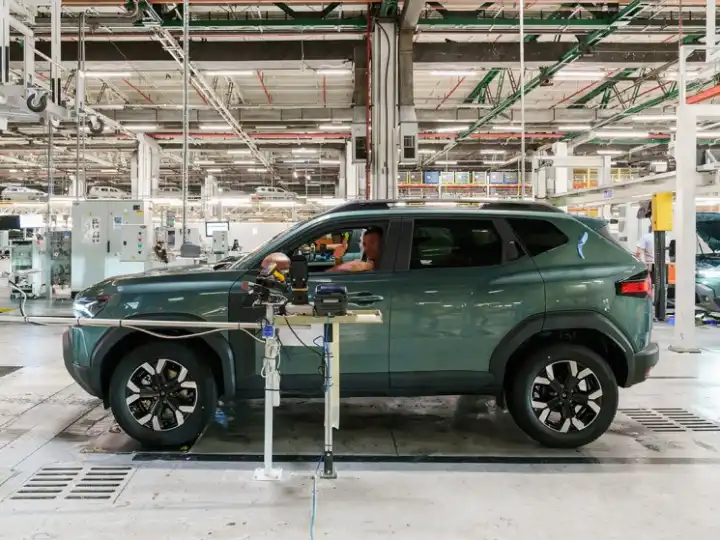
The rumble and thud of heavy industry is overwhelming. Inside the stamping department at Dacia’s production plant in Mioveni, Romania, sheet metal is being sandwiched under pressure to create doors for the car brand’s new Duster model. For the robotic machinery to do its thing, huge, heavy moulds are being manoeuvred across the hangar by a yellow crane arm that spans the entire 15-metre length of the roof. “This is the high speed line,” shouts Alina Predescu, the department’s senior manager and a Dacia employee for the past 15 years, referencing the equipment on display. The combined 12 lines that operate here produce 4.5 million pieces a month. Next, they’re passed to the body shop where the cars start to take form.To call Mioveni a production hub would be an understatement. Opened in 1968 during the early years of Nicolae Ceausescu’s Socialist Republic of Romania, the Dacia factory is a beast that almost never sleeps. Operating 24 hours a day over three shifts, it rests only on Sundays. A car is produced here every 55 seconds, while 350,000 cars roll off its production line each year. The figures are a testament to the phenomenal success of Dacia in recent years. The brand was long seen as a budget, no-frills player but has morphed into much more. Dacia now sells more than 650,000 cars a year and its Sandero recently became the best-selling car in Europe. The relationship, though, is reciprocal; Dacia wouldn’t be where it is today without its historic mothership plant, located about a 90-minute drive northwest of the capital, Bucharest.Cars in progressGetting hands-onWhen Monocle visits the plant – a series of grey, flat-roofed buildings surrounded by large car parks – we’re told to imagine it more as a town than a factory. On a map, its 288 hectares look almost as big as Mioveni itself, which sits below the plant’s slightly raised vantage point next to woodland. Before Dacia arrived, Mioveni (pronounced with a short “I” at the end) was a sleepy village of about 6,000 inhabitants. Today the automotive town is home to 30,000 people. Many Mioveni residents have either worked here or know someone who has – attracted by what one employee calls a job opportunity “gold mine”. With revenue of €5bn a year, the plant represents some 2 per cent of Romania’s GDP and about 2 per cent of its exports. Dacia began by mass-producing cars for the local market through a licensing agreement with Renault. Car kits were dispatched from France and assembled in Romania under a local brand name, though the plant shifted to making its own parts not long after. Dacia’s debut model, the 1100, was based on the Renault 8 and its second car on the Renault 12. That relationship came full circle in 1999, when the Paris-based multinational bought the brand. Renault’s CEO at time, Louis Schweitzer, had been to Russia and seen the success of Lada. He was convinced that there was a worldwide gap in the market for Dacia, especially in post-Iron Curtain Eastern Europe. With Renault’s arrival, efficiencies were greatly increased. Monocle is anecdotally told that before that, in the 1970s and 1980s, 30,000 employees were producing 100,000 cars a year, with capacity tripling at the plant between 2004 and 2010. “The factory has changed each year,” says the plant’s general manager, Sile Fulga, who has been here since 1987, wearing a Dacia logo wristband to protect his watch. “In 2000, we didn’t have any robots.” Underlying Dacia’s expansion has been an idea that counters the trends of the automobile industry. There has been a push back against the expensive bells-and-whistles cars that had already started to come onto the market at the end of the 1990s. “The idea was to say, what if we have a piece of the group that would not play the game of always more,” Dacia’s CEO Denis le Vot, also group chief supply chain officer, tells Monocle. Under Renault’s stewardship, Dacia launched the no-nonsense Logan model in saloon and estate versions, which came with wind-down windows and no air conditioning.Mioveni workers with their 2008 Dacia Logan pick-upCatalin Filip with his Dacia 1100 from 1969A 1974 Dacia 1300 parked in central MioveniMioveni policeman with his Dacia Logan patrol carThe car bodies being welded together by automated arms when Monocle visits are very different from those of the original Logan. Given how popular SUVs are worldwide – representing more than half of all sales in Europe – Dacia’s decision to pivot to an SUV look for most of its cars has proved prescient, even if many of them are smaller superminis, compact SUVs and crossovers. But Le Vot says that, though some aspects have changed, “the spirit is the same”. The less-is-more concept, for example, still prevails. Some might call them under-equipped but Le Vot prefers to say that Dacia produces cars with only the essential features. “We like to quit anything that is not strictly necessary,” he says, adding that the idea of “essentiality” is nonetheless shifting all the time given the types of vehicles coming onto the secondhand market, often a direct competitor of Dacia. Its cars feature manually adjusted seating, plastic over leather upholstery and understated screens; air conditioning, once deemed a luxury, is now part of the package. For a long time, Dacia also shunned lane-keep assist – the sometimes tedious feature that steers you back onto the road should you drift outside the lines – as too much technology, but new EU safety regulations mean that this is now part of the brand’s essentiality too. One of the less visible reasons why Dacia has become a superstar of the region – and beyond – is the way it has been run by Renault. Though brand studios in France might get design input, Dacia has been allowed to keep plenty of devolved powers, maintaining a 3,000-strong engineering corps in Bucharest, as well as a Romanian design team. There is a strong focus on what the Dacia CEO calls “design to cost”. Dacia cars are created with a sharp focus on the core things that matter to consumers in a process meant to separate real value from unnecessary technical glitz. Despite its range of cars, with the exception of its single electric model, Dacia also keeps the same platform across its catalogue – all the bits out of the consumer’s view, including the bulk of the body structure, axles and even a lot of the powertrains – which lowers costs. Lastly, Dacia taps Renault Group HQ and its R&D, which Le Vot refers to as “big brother”, to borrow technology developed years earlier.The city of Mioveni is dominated by the St Peter and Paul Cathedral, with its distinct orthodox spires, which sits just off a main thoroughfare. Inaugurated little more than a decade ago, it’s one of the many buildings constructed here since the 1970s – many of them nondescript communist-era blocks – as the population started to grow. Walking around town, the influence of Dacia is difficult to miss. The yellow taxis driving around the streets are Dacias, as are the police cars, both Logan models. The workers in blue overalls fixing up the square arrive in a Dacia pick-up, while a family of three we talk to is driving a workhorse Dacia Solenza from 2003 that needs pushing to get its engine going. Later, we meet members of a local Dacia classic car club, all eager to show off their vintage models. Catalin Francu was a driver for Dacia in the 1980s and 1990s during the company’s original foray into rally car racing (Dacia recently announced that it would be joining Dakar Rally from 2025). Like many people, for Francu there’s a pride and perhaps even sentimentality attached to a brand that is still seen as indivisible from Romania itself. “I was born with Dacia,” he says. “And for many Romanians, it’s the same thing.” Both Alin Stanciu, owner of a 2003 Dacia 1310 estate, and Catalin Filip, whose 1969 1100 turns plenty of heads as people walk past, agree. Stanciu talks about a “nostalgia” for Dacia that clearly comes from where he has grown up. “It’s normal because everyone has a connection to the plant,” he says. “Four members of my family worked there.”Still, present-day Dacia wants to be seen as much more than Romanian, even if CEO Le Vot calls it the heart of the brand. “Dacia is Romanian but Dacia goes way beyond Romania,” he says. “The uniqueness of the brand is not specifically the geography, though the history is linked to the geography.” For one, Romania is no longer the top sales market, with top spot going to France followed by Italy. The Mioveni plant also isn’t the only factory producing cars. Le Vot is quick to add that Mioveni has a “bright future” but there are two plants in Morocco that make what the CEO calls the “low drive”, more budget cars such as the Sandero and Logan, as well as the seven-seater Jogster. The Mioveni plant focuses on higher-end cars, including the Duster. Part of that gradual shift in brand orientation involved a redesign of the Dacia logo in 2021, which started to feature on new cars from the following year. It’s one of the many logo iterations we see on Dacias during our time in Romania. The kissing “D” and “C” feels modern and has been coupled with Dacia moving away from its traditional blue to an olive green. This has been complemented by lifestyle advertising that makes Dacia feel outdoorsy. Le Vot, quoting the brand markers, says that it’s all part of being “robust and outdoors, eco smart and essential but cool”.Alongside the brand’s first electric car, the China-made Spring, which hit the UK in October (a first-generation model has been available in other markets for longer), 2025 will see the release of a large suv, the Bigster – a bid to cash in on that lucrative segment of the market. It will be made right here in Mioveni, from the metal stamping to the final conveyor-belt quality control.Alongside the evolving look and feel, Le Vot argues that the way Dacia is perceived continues to shift. While he says that Dacia is “still the cheapest on the block” for those who want it, buyers aren’t just secondhand car owners looking for the only new car they can afford. Premium brands have become so expensive, he says, that plenty of new Dacia owners have gravitated from higher-end players. It means that 70 per cent of Dacia’s sales are now made up of its most expensive models. “The market is coming to us,” he says. And with it, Dacia’s evolution continues apace.Sizing upRenault has seen growth in medium and large-sized cars, and Dacia wants a piece of the action. Its Bigster is out next year and two more similar-sized bodies are planned for the near future.

Patience is a virtue: But is waiting in line really worth it?

Patience is a virtue: But is waiting in line really worth it?

The queue endures. Back before the misery of coronavirus, there was a spate of people getting in very long lines for fashion drops, over-logoed skatewear and even covetable buns. But then – phew – the pandemic killed the queue. It was replaced by text messages telling you when your time was up (not in grim reaper style, rather that your table was ready). But now? Otherwise sane folk are queueing for loaves of bread like it’s the USSR in the 1970s. People are voluntarily spending whole mornings in formation just to gobble a cream puff. Generation instant gratification has discovered a yearning for a very delayed payoff. This waiting game has even ensnared the worlds of academia and psychology as people ponder what the hell is going on. Not wanting to miss out on the action, or inaction, Monocle gets in line to find out how lust and restraint are intertwined.BistroCheap as chipsBouillon Pigalle, ParisWhen it comes to classic French bistros, Bouillon Pigalle is a hit with Parisians and visitors alike. Located on Place Pigalle, in the heart of the city’s former red-light district, the queue outside the restaurant regularly snakes around the corner of the block, with waiting times that can exceed an hour. Waiters in white shirts and black waistcoats serve dishes ranging fromsoupe à l’oignonandoeuf mayonnaiseto the French-cuisine cornerstone steak frites, all at alluring prices. Many of the people queueing outside note that this is a considerable part of the place’s appeal. “I’m queueing today with my flatmates from back home in Germany,” says Stephanie Schachel, a student living in Paris while spending a semester at Sciences Po. “I know this place: it’s cheap but good.” Another queuer, Nicolas Lopez, is also an international transplant to the city and showing visitors around. “I wanted to introduce my family to the concept of abouillon[a restaurant that serves traditional French cuisine],” he tells Monocle. “I particularly like thesaucisse-purée[sausage served with mash]. It’s French and inexpensive.” Everyone in the queue agrees, Bouillon Pigalle is perfect for an extended lunch with friends, perhaps with a carafe of wine, which here can range from a modestun quartto a supersize jeroboam; again, at prices that are hard to beat. “We are queueing because this place has theesprit bouillon[bouillon spirit],” adds Cécile Vassas. “There’s traditional French cuisine and a convivial brasserie atmosphere inside. And you can always order steak frites.” The consensus is: the queue might be long but once you make it through the door you will be rewarded tenfold.bouillonlesite.comThe prize: Bouillon Pigalle’s steak fritesWould you look at that queue!It must be our go nextYou’re kidding – we could have booked!?Maybe I should have followed her leadStarting… to get… hungryGood job this place is open till midnight…This queue is ‘Immobilier’…It can’t be for McDonald’s, surely…Ooh, a queue. Let’s joinOnigiri shopBanging the drumOnigiri Bongo, TokyoCome rain or shine, there’s always a queue outside Onigiri Bongo, a renownedonigiri[rice ball] shop in Otsuka. At the weekend people have been known to wait for more than six hours. When Monocle visits, the queue is already taking shape at 08.45 – nearly three hours before opening time. The first to arrive get a stool. Everyone in the queue is served green tea and spirits are high. Bongo’s owner is Yumiko Ukon, a youthful 72-year-old, who has been working six-day weeks for the past 40 years. “I’m the face of this place and I don’t like to disappoint people, particularly my regular customers,” she says. Her late husband started Bongo in 1960; they met after she tried one of hisonigirion a visit to Tokyo. It was love at first bite. Today, Ukon runs a tight ship with a team that starts work at 07.00 and spends the morning prepping before the doors open at 11.30. Ukon uses rice from Iwafune in Niigata prefecture and a wooden mould to make the ball, adding any of the more than 50 fillings on offer and wrapping it in seaweed. “People crave the taste of home-cooked food”, says Ukon. Kiyoe and Michiyo from Tokyo are the first in line. They saw Bongo on TV. “It’s fine,” says Kiyoe of the queue. “Women are used to waiting.” Masakazu has come all the way from Shizuoka. “I’ve never waited this long for anything,” he says. He’s planning to order the grilled salmononigiri, Bongo’s most popular.Sujiko(salted salmon roe) is another favourite, as is egg yolk soaked in soy sauce.When the restaurant recently relocated, the old interior came too, including the worn counter. “The world is changing but nothing changes here and that’s how people like it,” says Ukon. 2 Chome-27-5 Kitaotsuka, Toshima City, TokyoThe prize: Bongo’s ‘onigiri’What time does the show start?You look parched. Tea?I hope the rice balls are bigger than this stoolExcellent. A white line to keep the queue straightIt’s nearly in the bag, sisSo I said, ‘Queue must be joking!’No, you cannot go in front of meExcellent. A white line to keep the queue straightBagel shopRunning ringsIt’s Bagels, LondonNew York-born photographer Dan Martensen can name supermodels and actors among his subjects but it’s his bagel shop in north London that is turning heads. The idea to bring a slice of New York bagel culture across the pond first began as a passion project. But when the shop opened in 2023 it was clear that the business would become more than a sideshow.The prize: A snack from It’s BagelsFrom the moment it opens, a long queue grows outside It’s Bagels on Regent’s Park Road. “It gets a bit lawless,” says the manager, Franklin Arthur. “When we ask people to cross the road, to start a new section of the queue, people start jumping ahead and we don’t know who was there first.” He often has to leave the assembly line to put on a high-vis jacket and control the chaos. The shop hired its first queue manager, so that Arthur will be able to focus on the bagels. “The demand is outrageous,” he says. A mixture of north London devotees and out-of-town visitors make up the daily queue, which can be 50-people long by midday. Customers who bring friends and family are helping to drive the queues: when Monocle visits, David Lock has brought his mum, Tricia, visiting from Belfast, to his new favourite spot. Every week, Lock makes the journey from Bermondsey in southeast London to It’s Bagels and describes the occasion as “a bit of a pilgrimage”. But for others in line, the idea that waiting for your bagel makes it taste better divides opinion. “When you wait a long time for something, you have to hope [it meets expectations],” says Freddie Phelops, who is queueing for his first It’s Bagels experience. Another punter, Jack Bergman, welcomes the anticipation. “If you’re waiting 30 minutes for a bagel, it’s always going to taste better.” itsbagels.comAre we there yet?I promise… The second date will be better

Figures revitalising a 1980s mall and lifting a San Francisco landmark to new heights

Figures revitalising a 1980s mall and lifting a San Francisco landmark to new heights

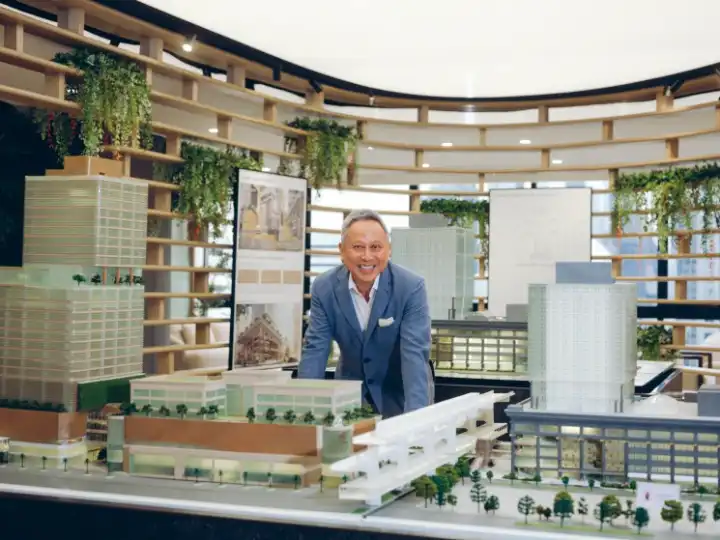
the chairmanCharn SrivikornGaysorn Property, ThailandMarch sees the reopening of Bangkok’s Amarin Plaza after an extensive renovation. Renamed Gaysorn Amarin, the 1980s shopping mall, flanked by postmodern Grecian columns, sits in Ratchaprasong, the Thai capital’s retail centre. Landowner Gaysorn Property bought back the building’s lease in 2007, and, after exploring several different plans, it is set to become the final part of a trio of buildings that make up Gaysorn Village.The initiative is led by chairman Charn Srivikorn. Originally an investment banker, he took over the family business after the Asian financial crisis in 1997. He first worked with Hong Kong Land to redevelop Bangkok shopping mall Gaysorn Centre in a union brokered by LVMH brands. He then went on to build Gaysorn Tower, the most sought-after office space in Thailand.Srivikorn’s family ties to the area go back to the 19th century and his siblings work alongside him as caretakers of the neighbourhood (twin brother Chai was instrumental in the construction of Ratchaprasong’s elevated walkway, which connected the district’s shopping malls, offices and hotels with the skytrain, transforming the visitor experience).A respected figure in Asian property circles, Srivikorn describes himself as an urbanist rather than a retailer. He wants Gaysorn Amarin to be a lounge where the entire district can “mingle” – a favourite word. At 62, he has no intention of slowing down (despite nursing a stubborn pickleball injury), with his sights set on developing other parts of Bangkok.Did you ever consider knocking down Amarin Plaza?We did. The first scheme with architecture firm Aedas involved merging Amarin Plaza with our neighbouring building, Maneeya. We decided not to redevelop in the end because there’s too much supply in Bangkok. By renovating, we can operate at a lower cost to the competition and still provide quality. And we can always redevelop later, when the market normalises, which we think will take another 10 to 20 years.Gaysorn will be operating a lot more of the space inside. Why?Brands used to be the activators of traffic and there was the seasonality of spring/summer and autumn/winter retail and fashion seasons. But today, Louis Vuitton needs to change its visual merchandising every two to four weeks. Smaller brands don’t have the same resources and that creates a gap. So yes, we have had to move from b2b to be more B2C, but we are looking more at placemaking and activating space, not retailing. Activation can come from a civic space and urban areas can be designed to [bring life to] a place or drive a retailing programme.The Gaysorn Amarin mallIt’s one of a trio of buildings that make up Gaysorn VillageGaysorn Tower contains sought-after office spaceLouis Vuitton is back as one of your anchor tenants. How did this relationship reignite?That wasn’t intentional. We had planned for a speciality concept store. But when they heard what we were doing, they came to us. It’s going to be different; they’re not calling it a shop. Louis Vuitton loves to innovate and I think this concept will be a first in Asia. We used to work with a number of their brands at Gaysorn Centre but LVMH changed its strategy more than a decade ago and they needed a bigger floor plate. We didn’t have the space, so they have their flagship stores in Iconsiam, Siam Paragon and Emporium.You operate a number of residential buildings too. Why did you venture into this alongside retail development?It’s fun. Also, we can make an impact by bringing in what we’ve learned on the commercial side. Retail is more than just a collection of brands. The way we think and design the customer journey and experience can be applied to residential, which is all about creating the environment for people to enjoy living.Are your residential developments the biggest revenue contributor?Well, our latest residential project, Tela Thonglor, generated about THB4bn [€104m] in revenue but that’s project-based. It’s not annualised. The revenue for our mixed-use properties last year was about THB1bn [€26m]; we closed the retail in Amarin. This year it should be about THB1.3bn [€33m] and eventually around THB1.6bn [€41m].How do you feel about 2024 compared to last year?Much better. The curve is going up. But looking ahead at 2025 to 2030, we are facing a different geopolitical environment and a lot more unknowns. I went up to Everest Base Camp in search of answers and I came to this conclusion: we invest to improve people’s lives and as long as we are doing that, we are adding value.Any worries for the coming year?My wife wants me to spend more time with her but I am not ready to do that just yet.gaysornproperty.comMarkets to watchHong Kong: Best for new homesWhile many cities, such as Paris and Berlin, struggle to cope with demand for property, Hong Kong’s supply of new homes reached a record high in 2023. Though these tend to be concentrated on Hong Kong Island because of a lack of terrain suitable for construction further afield, a new initiative that taps into private land is opening up a host of possibilities.Valencia: Best for rental returnsInvesting in rental property is particularly lucrative in the laid-back Spanish city of Valencia, averaging a yield of more than 7 per cent. And while demand is already greater than in Madrid or Barcelona, it’s still growing. Overseas real-estate investment and high availability have helped to drive this boom.Zürich: Best for co-op housingSwitzerland’s largest city has a long history of supporting non-profit housing. That’s why one in five multi-residential buildings are run by private co-operatives (known by the catchy moniker ofWohnbaugenossenschaft). Unlike in most European cities, Zürich’s co-operatives are not subsidised. They instead follow the municipal government’s century-old formula for calculating rents, ensuring a consistently low rate. Residents are so satisfied that no co-operatives have ever opted out of the model.Tokyo: Best for retail spaceBricks-and-mortar retail across the globe is on the up and Tokyo is leading the way. Not only does it boast one of the most attractive prime rent-to-GDP ratios but Tokyoites still have a strong attachment to physical retail. This makes it one of the world’s most attractive cities for brands looking to set up shop.Dubai: Best for hospitalityA buoyant tourism industry in the most-visited Emirate has created significant demand for hospitality spaces in recent years. Even better, the relatively straightforward process of setting up a business in Dubai means that investors are increasingly keen to back new hospitality ventures there.the co-foundersLyndsay Caleo Karol and Bill CaleoThe Brooklyn Home Company, USAToo often, developers are happy to ignore aesthetic and social values to boost their bottom line. The Brooklyn Home Company, based in New York, is trying to do things differently. It was founded in 2007 when real-estate developer Bill Caleo asked his sister, Lyndsay Caleo Karol, and her husband, Fitzhugh Karol, to help him design a property he had bought. The company specialises in renovating and constructing residences according to sustainable principles, integrating art and design features from local creative talent.How do you do things differently?Bill Caleo: Developers get a bad reputation for their history of abandoning projects once they’re complete, leaving new homeowners confused and worried. We consciously label all our projects as The Brooklyn Home Company properties, because we want to stand by our developments. I wouldn’t say we’re perfect – issues do come up. But we make sure to take care of our customers.We also try to do things the right way by surrounding ourselves with craft, supporting local artists. We also focus on the carbon footprint of our buildings. Many years ago, we started studying passive house-building techniques. It involves super-insulating buildings and bringing in filtered fresh air. This lowers carbon emissions and eliminates fossil fuels from the picture.Brooklyn Home’s Bill CaleoLyndsay Caleo KarolOne of the firm’s light-filled interiorsIt is guided by sustainable principlesHow did your approach of working with local artisans develop?Lyndsay Caleo Karol: When we first started out, my husband Fitzhugh and I were in art school at Rhode Island School of Design, so we know a lot of craftspeople, from woodworkers to metalsmiths.We work with young artists who are still in a discovering phase in their careers. But we also work with older master craftsmen. For 608 5th Street, a Brooklyn townhouse project, we worked with the third generation of a Polish family who are master stair builders. When we come to a project, we often think we know exactly what kind of materials we want to use. But we always learn by working with master craftspeople like them.What are the challenges when it comes to developing on a residential scale according to passive house principles?LCK: I’ve leaned on details from historical buildings – architecture from 100 years ago – to create a certain type of romance, an air of nostalgia. Features like fireplaces and gas ranges do create a sense of intimacy. But they’re highly polluting. So I have to focus on creating that sense of warmth through natural materials. Having said that, we’re now seeing the development of induction ranges that are ecologically sustainable.BC: In our early days, our customers demanded gas ranges. But people are embracing induction now and changing their perspective on what can be considered beautiful and high-end. We’re seeing a shift.thebrooklynhomecompany.comthe developerMichael ShvoTransamerica PyramidDeveloper Michael ShvoThe flight of businesses and workers from central San Francisco has turned one of America’s most productive cities into a case study in downtown decay. Look a little closer, however, and the green shoots are hard to miss: major investments are happening again in the urban core and the soon to reopen, skyline-defining office tower, Transamerica Pyramid, is a beacon for this revival. It’s also a billion-dollar bet on the city’s office property market.“The Pyramid is a symbol of San Francisco, no different from the cable cars and the Golden Gate Bridge,” says Michael Shvo, the Israeli-born developer who snapped up the building in 2020 for $600m (€550m). Shvo (pictured) brought in architecture studio Foster + Partners to give his 48-storey modernist skyscraper a top-to-toe refurbishment, ahead of its reopening this quarter. “We’re upgrading the building for the next 60 years,” says Shvo.Most floors of the Pyramid have been turned into offices and, according to the developer, 80 per cent of these were leased ahead of completion, mostly to venture funds, law firms and San Francisco’s growing cadre of artificial-intelligence companies. A restaurant and skybar are in the works, along with a members’ club by New York institution, Core.San Fran’s Transamerica PyramidThe Foster + Partners team have sought to turn the ground floor into a public plaza, opening up the lobby to the surrounding streets and boulevards with vast and inviting windows, while making space for a coffee shop, architectural bookshop and florist. “My goal here is really to activate the entire city block,” says Shvo, who envisions the Pyramid’s base as a thoroughfare connecting and enlivening multiple neighbourhoods downtown. “We want people to have a reason to come here that’s not just for work.”Enticing those people back to downtown, however, is going to be a challenge. Shoplifting and flagrant drug use continue to plague San Francisco’s image and the city has been slow to address a dramatic rise in rough sleepers. The city is on the mend but it will take a charm offensive to convince many that the centre is the place to be.Monocle toured the Pyramid ahead of its reopening and the lobby is particularly impressive, with the diagonal beams that hold up the tower now revealed. The Transamerica campus also includes a spruced-up park of historic redwood trees along with a second tower nextdoor, which has been entirely gutted for a mixture of retail and office spaces, and an adjacent 1930s building that has been reskinned by the Foster team. Both are still some years from completion.When the Transamerica Pyramid first opened in 1972, designed by William Pereira for the eponymous insurance firm, it was the tallest building west of the Mississippi River. Shvo often tells an anecdote about visiting San Francisco as a seven-year-old and drawing a picture of the building that he would one day own. He’s less enamoured, however, by many of the other blocks that dominate the city’s skyline. “The reason buildings are vacant is not because Twitter decided to cut space; it’s because these buildings are not functional any more or relevant to the needs of today’s tenants,” says Shvo. There is a flight to quality, he adds. “As long as tenants are provided the right kind of office space, they will come to work.”shvo.com

Business agenda: The case for democratising aviation and the magazine business in Manila

Business agenda: The case for democratising aviation and the magazine business in Manila

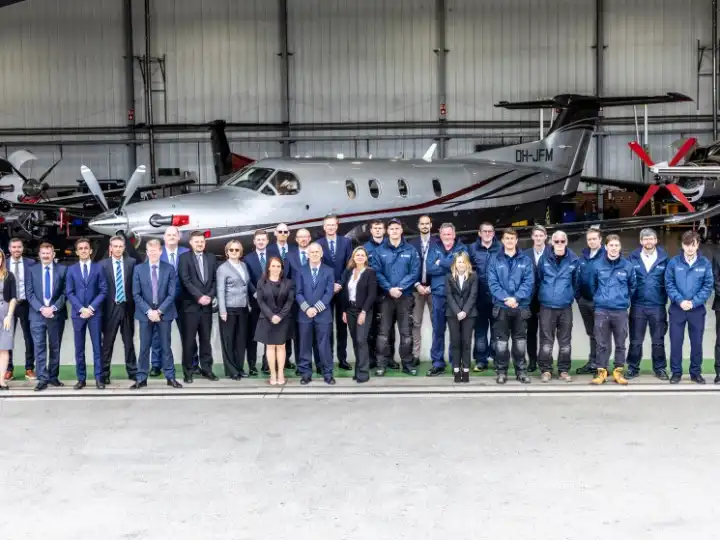
Elevated insightsPrivate pilot perspectivesPrivate and commercial pilot Edwin Brenninkmeyer is betting big on the future of aviation. “The sector has changed a great deal. Chiefly, funding is increasingly available to help make aviation more sustainable,” he tells Monocle.As the founder and CEO of Oriens Aviation, which is based in Biggin Hill (home to a private airfield) and is the exclusive Pilatus and Tecnam UK aircraft distributor, Brenninkmeyer knows the business from inside and out of the cockpit. “Aviation is a conservative industry,” he says. “New technologies have a hard time gaining certification and acceptance but I’m convinced we will succeed as long as people don’t get frustrated and lose interest.”His passion for flight started at a young age. “I always loved model aeroplanes,” he says. He earned a private pilot’s licence at 17. But Brenninkmeyer’s career initially followed a different trajectory. His early professional years were spent in retail, gaining insights into leadership and team management. After a stint in venture capital watching the growth in the aviation sector, he returned to the skies. “There was a big opportunity in the mid-2000s with technology entrepreneurs producing cost-effective jets,” he says.The company was founded on a vision of democratising business aviation and provides services including sales, charter management and plane maintenance. Business is booming, especially in the US. “The whole infrastructure there is very different from Europe,” he says. “Seventy to 80 per cent of US business aviation customers are middle management, so it’s not just for the rich and famous,” he says. Brenninkmeyer hopes to change attitudes closer to home too. “In Europe business aviation is often seen as a frivolity rather than a practical tool to save time.” With the company’s values and foundation set, his focus is ethical business and refined hospitality. “If you have a good culture within your company, that translates to your customers.”Brenninkmeyer is keen on opportunities to support the industry and the investment it’s receiving for innovation. “If you’re developing hydrogen-powered aircraft that are more environmentally friendly, what infrastructure will those aircraft need?” he says. “That’s the next step.”For more top-flight stories, tune in to Monocle Radio’s business show ‘The Entrepreneurs‘.Paper stateMagazine meccaSpruce Gallery opened in Metro Manila at the end of 2023, close to the headquarters of the Asian Development Bank. Both share a similar mission to provide life-improving infrastructure – on a different scale. While the bank finances dams, the gallery is plugging a media hole in the Philippines’ largest metropolis. “We are the only magazine store in the entire city,” says Ric Gindap, who founded the gallery with his business partner Bonnapart Galeng.The smart space displays imported magazines alongside a rotating art exhibition. Galeng sits at the counter to provide recommendations, while chairs invite lingering. The absence of a website encourages visitors to come here to discover new titles, as well as create a community around print. Competitive pricing is another draw.Gindap and Galeng decided to act when the major bookshop chains gave up on stocking print titles. “They just pile up the back issues in one corner and expect people to respond,” says Gindap, who was the editor ofMemomagazine when Galeng joined in 2006, eventually becoming its fashion editor. “Our DNA is really in magazine creation,” says Gindap.The response to Spruce Gallery has been both encouraging and educational. Independent titles have been flying off the shelves faster than they can be restocked, while venerable or established fashion glossies have been slower sells. Teens and twenty-somethings are buying text-heavy publications with few pictures;The Paris ReviewandThe Monocle Companion(our own paperback essay series) are bestsellers. “These kids are bombarded with digital images all the time,” says Galeng. “They’re a reading generation and want to hold something that’s tactile.”Star glazingCeramic excellenceThe small Japanese city of Tajimi, famous for its rich clay soil, has a 1,300-year history of pottery. The city has been at the centre of Japanese tile production since the early 20th century and 90 per cent of tiles made in Japan now come from here – an output offset by smaller makers producing tiles using traditional techniques.Masashi Kasai founded Tajimi Custom Tiles (TCT) in 2020 to connect architects and designers with skilled makers who could produce bespoke tiles that had the handmade feel of pottery. TCT’s presence recently expanded in Tajimi thanks to a new gallery and kiosk where designers can peruse samples, order from its semi-custom range (39 shapes in 100 colours) and buy one-off pieces.Kasai wants TCT to grow and, buoyed by the low yen, overseas sales have been brisk, with projects for luxury brands and Melbourne’s new Parkville Station. TCT’s Zürich-based creative director, David Glättli has also introduced collaborations with international designers to display possibilities.“Factors beyond our control, such as interest rates, can affect our sales,” says Kasai. “But the overseas market for Japanese tiles is definitely expanding.”tajimicustomtiles.jp

The business agenda: Manufacturing cranes in the US, Colombia’s hospitality scene and the business of Tracht

The business agenda: Manufacturing cranes in the US, Colombia’s hospitality scene and the business of Tracht

Manufacturing – USATall ordersWhile the security of global shipping routes has preoccupied governments around the world in recent months, the US has also swung its attention to another fixture of its maritime infrastructure: cargo cranes at its ports.A 2023 newspaper report alleged that US officials were concerned that technology woven into the cranes that lift containers from ship to shore might be harvesting data on the US’s maritime economy. The majority of these contraptions are manufactured in China: Shanghai-based firm ZPMC makes 70 to 80 per cent of the world’s cargo cranes. The claims have been refuted but in February the US government announced a $20bn (€18.4bn) investment in its port infrastructure, with a focus on reviving its largely dormant crane-manufacturing sector.The return of US crane production is set to take shape over the next five years, meaning that domestic manufacturing will do much of the heavy lifting in a sector of the US economy that currently generates $5.4trn (€5trn) every year. Monocle comment:There’s a fine balance between security and paranoia. Trade barriers damage as well as protect.Audio – AustriaSound effectsProfessional-grade audio equipment has long ceased to be the preserve of radio journalists and sound engineers, and established audio hardware companies are investing heavily in versatile and easy-to-use microphones and recorders.One of them, Austrian Audio, emerged as a reaction to off-shoring. In 2017, when AKG – Austria’s celebrated maker of microphones and headphones – was acquired by South Korean giant Samsung and closed its facilities in Vienna, a group of its engineers stayed behind and set up on their own. “We wanted to create something new but respectful of our heritage,” says Austrian Audio’s Perry Damiri.Though it caters to entry-level creators, its biggest sellers are expensive microphones used in the world’s best recording studios and concert halls.Transport – Canada&USASpark and rideFor school students across North America, there is one sound every morning that makes the heart either sink or sing: the trundling arrival of a bright yellow school bus. But a quiet overhaul to one of North America’s most recognisable forms of transport is under way at a new manufacturing plant built and operated by Blue Bird, the firm that debuted the famous buses in the 1920s.The facility, in the US state of Georgia, opened a year ago to cater to the soaring demand from school districts across the US and Canada for electric buses, rather than diesel. The plant has the capacity to produce almost 5,000 buses a year.School buses are well-suited to electrification. Fixed routes make them ideal for range-limited EVs and the periods outside the school run give plenty of charging time. They also ensure cleaner air for children, which has encouraged education authorities to start electrifying fleets. By 2032 it’s estimated that almost half of school buses will be electric, which will make the school run less arduous – for the environment, at least.Publishing – IbizaCreative outletWhen Sonja van der Hagen settled in Ibiza after a career at German furniture firm Dedon, she was excited to discover a rich community of artists, artisans and architects, yet many were struggling to be seen and heard. So her new book,Made in Ibiza: a Journey into the Creative Heart of theWhite Island, lands like a celebratory lifeline. On an island where superclubs and summer crowds cast shadows, she hopes her compendium of Balearic creativity will inspire more people to buy local. How much did your perception of Ibiza change while researching the book?Everyone knows the “party island” cliché but it was reassuring to discover an almost-invisible creative community and delve into thousands of years of history. But we had to dig for information, highlighting how little these layers are available. More needs to be done to honour the island’s artistic spirit.How can you encourageisland visitors to ‘give back’?I wanted to connect people to the quality of island products by showing the integrity of the people behind them. I enlisted journalists to get to the heart of their stories, some of which stretch back generations. All contribute to Ibiza’s identity.What advice do you have for others hoping to find the right publisher for their own book project?Be ready: have a good concept; make the presentation shine; be prepared to adapt. Most importantly, find a publisher that understands your vision and shares your passion.The EntrepreneursLaura Kramer on…Pure shoresNestled on Tierra Bomba Island, a breezy boat ride away from Cartagena, Blue Apple Beach isn’t your run-of-the-mill retreat. As the first island resort worldwide to earn B Corp status, it’s aiming to be a game-changer in Colombia’s hospitality scene.Tierra Bomba IslandFounder Portia Hart (pictured) didn’t set out to save the planet when she opened the doors in 2016. “I just wanted to start a company that sold rosé on the beach with good music and nice food,” she tells Monocle.  Originally from the UK, Hart followed the sun to the south of France where she worked for almost a decade before finding her way to the Caribbean coast of Colombia. “I wanted to live somewhere where there was a sense of optimism.”Founder Portia HartHart, whose mother is from Trinidad and Tobago, immediately felt a sense of belonging. “Everybody looked like they could be my cousin. For once it wasn’t hard to buy makeup or to find a hairdresser,” she says. “The country was coming out of a dark time and everyone was enthusiastic and starting businesses with no money.”Today, Blue Apple Beach has 11 bedrooms and the hotel is a love letter to Hart’s years in the Côte d’Azur, with its beach club, Mediterranean-Caribbean fusion restaurant and a DJ who spins European and Latin house tunes.Hart has three other ventures, including a non-profit focused on job creation through waste management and glass recycling. At the heart of it all is a commitment to creating vibrant businesses that play a role in the neighbourhood. “A huge part of being a sustainable business is the human side,” she says. “It can be something that improves the quality of life in the community.”For more inspiring business stories, tune in to ‘The Entrepreneurs‘ atmonocle.com/radioFashion – AustriaBack on trachtThe biannual Fesch traditional costume trade fair is held in Salzburg and attracts about 200 brands and 1,500 shop buyers – all of which are focused on what is now a growing market for long-established Alpine andTrachtdress (think lederhosen,dirndlsand some seriously good hats).Marcel Pachteu-Petz, owner of menswear label Trachten KaiserHandmade straw hats by Bittner, a hatmaker based in Bad IschlWhat started as a village uniform that was sported by 16th-century peasants across Bavaria, Austria and South Tyrol has been elevated to a focus of fashion shows, premium shops and bespoke fittings. It’s also an industry that to this day supports a world of impeccable craftsmanship and a network of family-owned ateliers.And as the ceremonial costume has ceased to be a symbol of political affiliation, today’sTrachtenhave found function as an urban alter-ego. “On the streets of Munich, it’s not unusual to see Bavarian jackets on dress-down Fridays,” says Sebastian Haufellner, head of buying at longstanding Bavarian department store Lodenfrey. It’s all a joyful way of holding on to a sense of identity.Cowhide lederhosen by Salzburg-based label BergheimerHungarian dirndl maker Kinga Mathe designed Trachten for Hugo Boss

Inside Canyon’s quest to revolutionise city cycling with high-performance e-bikes

Inside Canyon’s quest to revolutionise city cycling with high-performance e-bikes

“This is a do-everything bike,” says Arthur Janzen, Canyon’s global category director for urban and recreation, suitably dressed for a ride in shorts and a T-shirt. “No matter where you go, the bike supports you.” We’re on a two-wheeled tour of the bike brand’s global HQ in Koblenz. In the hills above us is German wine country and the sun is shining as we ride down a path next to the Rhine, testing the bike that Janzen is referring to, the Pathlite:On SUV, as well as the Roadlite:On CF. These are two of the latest e-bikes in this category.Canyon, with its huge number of pedal and e-bikes – from road to mountain – on offer via its website, is clearly ambitious. It’s determined to be at the forefront of a bicycle industry that’s continuing to develop at almost the same lick as the automotive trade.The Roadlite has wireless gear changing, lights integrated with its battery and a motor by Porsche-owned company Fazua. The Pathlite, a trekking bike with fat tyres, comes with the option of abs (the anti-lock braking system pioneered by car designers) to stop from you going over the handlebars, as well as a belt-drive system that lets the rider change gears with a twist of the right handlebar rather than a click shift. Both offer graded levels of pedal assist – and cost several thousand euros.The company’s new HQ – a collection of box-shaped, black-and-white buildings comprising offices, a showroom and an e-bike centre – opened last year. When Monocle meets the company’s CEO, Nicolas de Ros Wallace, he is sitting in a Vitra armchair in an office filled with high-performance bikes and cycling paraphernalia. De Ros Wallace, who has Spanish, Italian and British roots, is sporting one of the brand’s black T-shirts and, though we’re assured that dressing in company kit isn’t compulsory, most people here are embracing the look. De Ros Wallace came onboard in 2021, after leadership roles at Zara and, most recently, Nike, where he oversaw the Jordan segment from the sportswear behemoth’s European base in the Netherlands. He still commutes to Canyon from Utrecht.Fourth-generation Aeroad CFR in Canyon’s R&D departmentNew HQ in KoblenzBikes on displayAssembly lineDe Ros Wallace says that urban bikes represent about 5 per cent of global sales, something that he wants to increase. “One of our strategic pillars is urban mobility,” he says. “But it doesn’t have to come by bringing down performance. It has to come by pulling up urban mobility.” He is determined to bring a design-forward, technology-filled approach to city biking, an area that he thinks offers big opportunities for growth as metropolises reassess their transport infrastructure.Canyon, which employs nearly 1,700 people worldwide, including at a hub in Amsterdam, isn’t aiming to be the next Specialized or Giant Bicycles. In fact, being the biggest bike company in the world isn’t part of its game plan. “Others play that role,” says De Ros Wallace. “Our ambition is to be the most innovative and inspiring.” The brand is banking on differentiation to stand out from the pack as it looks to tweak its catalogue. Part of the plan, being an e-commerce player, is striving to provide the best customer service and extending the ways in which consumers can interact with the brand. This has been done through investment in an app and a forthcoming membership scheme. Canyon’s physical presence is also being extended with the growth of its Canyon Factory Service (CFS) centres – essentially repair workshops – that are currently operating in towns including Rotselaar in Belgium and Eindhoven in the Netherlands. Munich’s CFS is slated to open in early 2025.Founded as a bicycle retailer called Radsport Arnold in the 1990s by brothers Roman and Franc Arnold, the company moved into manufacturing and by 2002 had renamed itself Canyon. Franc is no longer involved, while Roman sold a majority stake to Belgium-based investor Groupe Bruxelles Lambert (GBL) in 2020, retaining equity in the company as well as chairmanship of the board. Despite its desire to push into cities, Canyon’s brand DNA still draws on its sporty beginnings, with a focus on high performance, and there remains a strong link to athletes. This is something that Monocle sees while touring the showroom, where bikes used by cyclists including Dutch superstar Mathieu van der Poel are on display next to floor-to-ceiling windows. More than 50 riders were on Canyon bikes at the Paris Olympics and the company sponsors some 270 athletes, as well as having several high-profile ambassadors, including US basketball player LeBron James.The link to sporting excellence is clearly aimed at making Canyon both inspirational and aspirational. “We build the best bikes for the pros but we also want to trickle down,” says Sven Reutter, a Canyon product manager, as we visit the Innovation Lab, part of the brand’s R&D centre, which features a soldering station and a set of small 3D printers. Ready to rideTest lab team manager Stefanie SchunckElectric bike showroomCEO Nicolas de Ros WallaceWheels in the factoryThe R&D is just one part of the Koblenz-based design and engineering machine. Canyon is keen to point out its state-of-the-art facilities, including a test lab where such things as frame stiffness are tested and gizmos including a 3D optical scanning arm are deployed to ensure that frames have been made correctly. There’s also a destructive test lab – which sounds more fun than it looks – where Canyon ensures that new bikes can stand the test of time before going into production.A short drive from the HQ, Monocle visits a big factory facility where the bulk of Canyon’s higher-end bikes are assembled. Hundreds of parts are needed to put the bikes together and these come from around the world, from Portugal to Taiwan. The factory, where a flashing green light indicates that work is about to begin on a line of bikes awaiting stages such as gear wiring or motor attachment, can produce up to 400 bicycles a day before they are boxed and shipped. So are there any plans to manufacture outside Germany? “For us, local for local is the ideal: Europe for Europe; Asia for Asia; the US for the US,” says De Ros Wallace. “It’s the ideal but not the reality because much of the industry is in Taiwan.” Still, there are plans to open a warehouse in Asia to make logistics more efficient.All bikes need oilAll bikes need oilAddressing minor scratches or blemishesCT scanner used to assess potential issues with a frameCanyon hopes to forge ahead, despite the industry looking a lot flatter than it did during the pandemic, when everyone seemed to want to hop on two wheels and get fit. Sights are set on growing the current sales of €741m to more than €1bn by 2025, with plenty of opportunity to increase market share in the US, where the company has a southern Californian outpost, as well as southern Europe and Asia. Canyon is also aiming to extend its clothing line and move into accessories such as shoes and helmets. “We’re investing heavily in talent,” says De Ros Wallace, who owns five bikes – all of them Canyons, of course. “We are the right size to manoeuvre.”Spoilt for choiceCustomisation will be a key part of Canyon’s future success. Customers will soon be able to pick out their bike’s paint finishes, wheels and more.

Reaching for the sky

Reaching for the sky

About three minutes ago, Monocle took off from downtown Brisbane. There’s an empty seat to our left and two more behind us. The cabin is suspended beneath the wings of a pilotless electric aircraft, whose silver propellers hum away. “Wave if you feel woozy,” says a disembodied voice. But airsickness won’t be a problem, not least because we’re sitting in a chair on an airfield in Hampshire, England, wearing a VR headset. The voice belongs to an employee of Wisk, the California-based Boeing subsidiary that built the pilotless air-taxi model in the middle of the tent.‘Is it a bird? Is it a plane?’ (It’s a plane)It’s quite a ride. The air taxi would offer a quick, scenic alternative to a tedious 30-minute car journey. And, if all goes according to plan, it might be a transfer option for visitors to the 2032 Brisbane Olympics. But will people be willing to fly in a vehicle without a human being at the controls? “It’s like a driverless car,” says Wisk’s Carrie Bennett, who has clearly encountered this reservation before. “It’s fascinating at first but then you forget about it because everything just works. And you don’t have to worry about a child chasing a ball across the street.”The Farnborough Air Show is huge. It has more than 500 exhibitors and some 35,000 people visit over its five days. This year’s iteration is quite quiet in terms of big orders for commercial jets, though that’s possibly a reflection of an industry still searching for its level in the wake of the coronavirus pandemic. At the last Farnborough before the virus struck, in 2018, a record 1,464 orders were placed with the two biggest manufacturers, Airbus and Boeing. In 2022, that figure was 441. This year, it’s 256. Manufacturers are also beset by supply-chain difficulties, which are off-putting for potential buyers. Airbus has an order backlog of 8,585 aircraft; at current rates of production, that represents more than a 10-year wait. (Nevertheless, it’s demonstrating the A321XLR, an extra-long-haul variant of its single-aisle workhorse, which Iberia hopes to start flying this year.)Air India’s new Airbus A350Among those making purchases, Qatar Airways has made a particular effort, to the extent that the entrance to Farnborough’s main exhibition hall resembles one of its tonier Business Class lounges, complete with a string duet and a Diptyque scent dispensary (the airline has confirmed an extension of its Boeing 777-9 order from 40 to 60). A physical presence is, however, no guarantee of sales. Brazilian manufacturer Embraer has parked on Farnborough’s aprons a handsome black and turquoise E190F cargo jet but has announced no new commercial deals (Embraer has, however, sold six A-29 Super Tucano attack aircraft to Paraguay’s air force).Aerospace companies setting out their stallIf there’s one thing that demonstrates just how far the Farnborough Air Show has come since it was first staged in 1948, it is its focus on clean and renewable energy. Representatives of the aviation industry seem determined to stress that the environment has no stauncher allies. Suspend your cynicism, however, and you’ll see that there’s a lot going on in this realm. The hoardings of ZeroAvia boast of the UK-US firm’s inclusion on lists of top green-technology companies. Rudolf Coertze, its head of research and development, explains that the firm is working towards having its zero-emission hydrogen-electric powertrains adapted to small passenger aircraft the size of a Cessna Caravan or a Dornier 228. And he says that it won’t stop there. “There is no reason why this wouldn’t ultimately work with a Boeing 737 or Airbus A320 – and that could be coming by 2035. It would remove a large fraction of emissions caused by aircraft.”Small aircraft will serve as pioneers in this regard. The Cassio is French start-up Voltaero’s rear-propeller electric-hybrid aircraft. There are high hopes for the plane and Global Sky has reserved 15 of them during the show (232 were pre-ordered before the end of Farnborough). Jean Botti, Voltaero’s CEO and a former chief technical officer at Airbus, is an enthusiastic salesman. He sits us in the pilots’ seats and explains how the airframe can be adapted to carry passengers, post or cargo, or perform rescue operations. Future, larger models will have retractable undercarriages and pressurised cabins. “It could replace a lot of light aircraft and also compete with business aviation,” Botti tells Monocle. “There’s a lot of criticism of private jets and, of course, this is much, much cleaner. It will also be cheap to fly: €400 to €500 per hour.”Wisk’s four-seat autonomous air taxiIf I just press here…Curved wingtips of a British Airways Airbus A320neoCommercial planes on show at FarnboroughQatar Airways Boeing 787 DreamlinerEuropa XS monoplaneFor all the talk of a cleaner, quieter future for aviation, some aspects are eternal. The most sophisticated machines will still need the most basic parts, someone will always be needed to build them and a marketplace as busy as the Farnborough Air Show will always help to sell them. Beagle Aircraft is based nearby in Dorset; customers for its components include BAE and Leonardo. Among the exhibits at its Farnborough stall are a cargo door from a business jet, an outer leading edge from the wing of a German Air Force Tornado and a flight simulator. “We didn’t make that,” says Beagle’s order-book manager, Tom Rosser. “But if you don’t have something to draw people in, they’ll walk by. And for the five or so minutes when they’re on the simulator, you have a captive audience. That lets us explain why the things that we make are important.”Coming to Farnborough, says Prosser, isn’t just an exercise in PR outreach. A lot of meaningful business gets done here. “For a company our size – just 100 to 120 people – it wouldn’t be worth doing as a loss leader,” he says. “Last year we paid for the stand with the sales that we made on the first day. And the lunches definitely help to get agreements over the line.”Up in the airGlobalIn The Jetsons, flying cars glide effortlessly around Orbit City (writes Jakob Funkenstein). But since the cartoon was first broadcast in 1962, the basic airframe and engine designs of large and small commercial aeroplanes haven’t changed very much. However, a new generation of electric vertical takeoff and landing (EVTOL) light aircraft will soon enter the market, promising to revolutionise urban transportation. EVTOL makers, prospective operators and vertiport companies claim that these vehicles will end traffic gridlock and shorten commutes – and your ride will be fully autonomous. Though it’s unlikely that we will be riding in private EVTOLs 10 or 20 years from now, we might see ride-sharing in high-density locations, such as airports, sports venues and tourist attractions.A huge effort is now under way to figure out the infrastructure needs of EVTOL operations in big cities. Traffic and avoiding collisions with other aircraft are key concerns. Vertiport construction also represents a major investment – the more landing pads, the better. However, that requires space, which is costly. All of the investment required in design certification and infrastructure development begs the question: will the end product be affordable to ordinary users? Every player appears to have a different solution for making urban air transport economically viable. Manufacturers such as Joby and Archer are so confident that not only are they producing EVTOLs, they are planning to operate them too.How the fare of an EVTOL ride is calculated will depend on factors including distance and demand but operators will probably have to charge many times more than the current land-based taxi firms. There’ll be technology enthusiasts who will jump at the chance to be one of the first to try out this next-generation commute but there’s no guarantee that even they will remain loyal EVTOL users.If you build it, will they come? In Paris, a protest movement called Taxis volants Non merci is already opposing the idea. Safety concerns aside, the movement argues that it’s not worth paying social costs such as extra noise, let alone the desecration of Paris’s skyline. So it might be decades before average citizens can hail an air-taxi.Funkenstein teaches aviation management at IU Internationale Hochschule in Berlin.Top three deals at FarnboroughFlynasThe biggest deal at this year’s event was between Airbus and Riyadh-based Flynas, Saudi Arabia’s first low-cost airline. Flynas is best known as the airline of choice for budget-conscious pilgrims visiting Mecca: during the last Hajj season, the airline filled 100,000 seats. It is now significantly expanding its all-Airbus fleet, ordering 130 A320s and 30 A330s, with delivery to begin in 2027 – a huge move by an airline whose current fleet consists of just 64 aircraft.Japan AirlinesThis year, Japan Airlines (JAL) finalised orders for 20 Airbus A350-900s and 11 A321neos, and for 10 Boeing 787-9s, with an option on 10 further 787s. The A350 order was reduced by one from the terms announced in March: the 21st had been intended as a replacement for the JAL A350 lost in a runway collision at Tokyo Haneda in January but JAL has decided that it can live without it. Boeing was clearly grateful for the 787 order: the firm’s senior vice-president, Brad McMullen, went out of his way to thank JAL for sticking with the company. Korean AirBoeing’s recent difficulties were reflected by a restrained presence at Farnborough. The much delayed 777-9, for example, was only represented by a mock-up of its cabin. So, Boeing will have appreciated the vote of confidence from Korean Air, which signed for 20 777-9s, 20 787-10s and options on another 10 787-10s – a reported outlay of $12.6bn (€11.5bn). Due for delivery in 2028, these will be a significant boost to Korean Air’s fleet ahead of the completion of its long-planned acquisition of Asiana Airlines.Automatic for the peopleThough autonomous aircraft will initially be small, there are companies now insisting that there’s no practical reason why airliners can’t be programmed to fly as reliably as any drone.
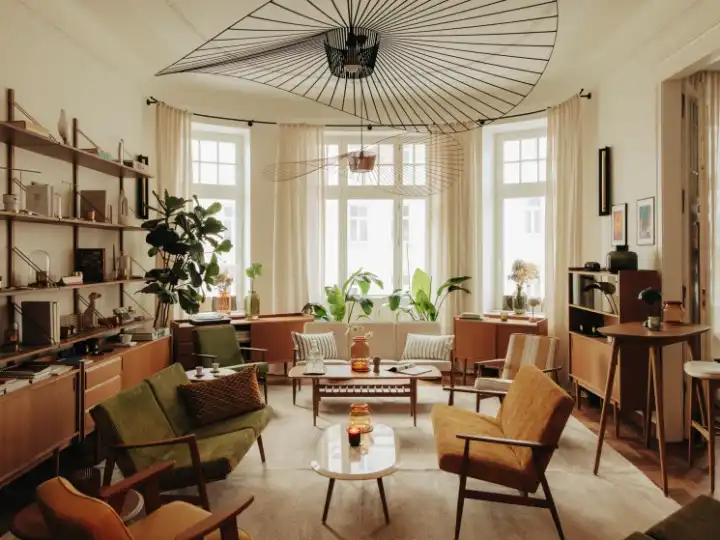
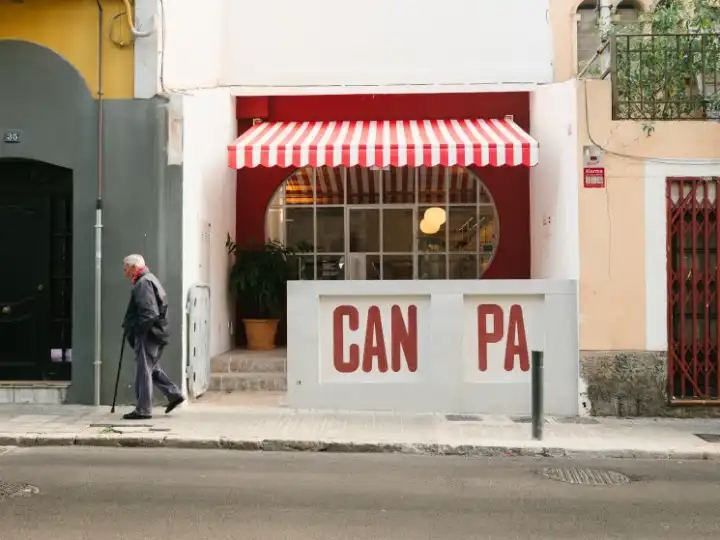
Future proofing the real estate sector: We hear from 10 industry professionals

Future proofing the real estate sector: We hear from 10 industry professionals

1.“The focus for 2024 must be a robust drive toward net zero, as well as addressing the urban affordability crisis. To tackle these challenges, there’s a critical need for the industry to unite – architects, planners, developers and other stakeholders must come together to form a cohesive, visionary voice. There are bright spots: we can see groups of pioneers bringing forward transformative ideas while technological advancements, particularly in property technology, offer significant potential to revolutionise our industry.”Coen van OostromFounder and CEO, Edge, The Netherlands2.“Issues in 2024 include a severe shortage of skilled construction workers and concerns over carbon taxes and environmental protection. Addressing these challenges involves designing for waste reduction, enhancing construction methods such as prefabrication, investing in education and prioritising the use of local materials. Sustainable and eco-friendly materials are gaining maturity, while local architectural styles are being increasingly valued.”Aaron LeeDeputy chairman, JUT Land, Taiwan3.“The buzzword for property developers and agents is ‘housing’. The rise in interest rates and the weak rental market have contributed to housing becoming one of the biggest challenges for Portuguese politicians, who have created two legislative packages called Mais Habitação [More Housing] and Simplex Urbanistico [Urban Simplex] with measures designed to increase supply.”Sofia Rodrigues NunesCo-head of Real Estate, Gómez-Acebo & Pombo, Portugal4.“Initiatives in schools can help to showcase our industry, along with large-scale efforts to engage young people through employability programmes, mentoring and paid work experience.”Andrea Carpenter Director, Diversity Talks Real Estate, UK5.“I see a massive commercial opportunity in investing in buildings that are at risk of being stranded assets from a sustainability perspective and making them more environmentally friendly. This means identifying how you can reposition a building to have a measurable positive impact.”Alexander BentCo-founder, Undivided Ventures, Hong Kong6.“Preparation is the key word for this year: paperwork, licensing and assembling land for new projects. The continued strength of the office market in Ho Chi Minh City is a major bright spot in southeast Asia.”Philip CluerCOO, Refico, Vietnam7.“Intelligent concepts and customised solutions are in demand: watch out for subsidised projects and neighbourhood developments, such as multi-generational housing, based on environmental, social and corporate governance criteria. Commercial development is on the up. Companies are reorganising to shorten value-creation routes, giving the sector a positive boost.”Michael KörnerManaging Director, Invest Region Leipzig, Germany8.“As well as sustainability, we should focus on affordability and creating ways to integrate better into the community fabric of a city. The industry needs to get used to having its asset use change quickly. It still thinks in long-term trends that don’t reflect changing customer behaviour. We need, for instance, to look at the way digital media has freed up how customers consume their product; people lead more mobile, fractional lives and our homes also need to be able to adapt. On the bright side, consensus is forming about CO2 standards in construction.”Claus Mathisen CEO, Urban Planners, Denmark9.“There will be many players who will breach loans and be in self-preservation mode. For others, assets will be repriced and they’ll find wonderful opportunities to invest. The real-estate industry is facing a mountain of challenges, from building safety issues to office vacancy and valuation crunches because of the interest-rate environment. Sectors such as housing, hospitality, studios and data centres, where owners know how to operate assets, will continue to do well.”Ryan PrinceVice-chairman, Realstar Group, Canada10.“There’s a new reality and this must be acknowledged, addressed, managed and celebrated. The world has changed, and so we must address our previous assumptions. People are social creatures and have both a need and a desire to engage, experience, interact and have a community. This is an essential element to design and development that spans across all sectors of real estate.”Hanna StrueverOwner, Retail Portfolio Solutions, USA

Carving out a niche in the timber-furniture industry

Carving out a niche in the timber-furniture industry

In late winter the weather conditions at Kleniewski Tartak can make work difficult. Surrounded by the dark forests of southeastern Poland, the sawmill is covered in snow when Monocle arrives. And yet it is buzzing with activity. Trucks rumble in, loaded with fresh supplies of wood, and cranes whir into action, extending their claws into the air.Lorry bound for Kleniewski Tartak with fresh goodsThe modern way to slice logsThe busy scene is emblematic of Poland. The country’s economy has flourished since the fall of communism in 1989 and, with more than a third of its landscape covered in forests, international furniture brands across the globe have taken note of Poland’s plentiful resources and robust financial system. It’s a situation that has helped to transform the country into the world’s third-largest exporter of furniture. Kleniewski Tartak is prospering.Success hasn’t been effortless. “When I took over the sawmill from my father in 2017, we were mainly selling to the domestic market,” says Kleniewski Tartak’s owner, Waldemar Kleniewski. “I needed to show international clients that we were a modern company.” Buying Italian and Swedish machines to modernise production, Kleniewski shifted to processing raw oak and decentralised decision-making to employees. It involved breaking with the standards that had existed in Poland for decades, says Kleniewski. “It is the right way to do business.”The Boegli horizontal band saw in actionProcessed wood in the sawmill’s drying chambersAt 29, Kleniewski is young for a sawmill owner. But his entrepreneurial energy is common across the country. Down a winding road through the forest, Monocle finds two of Kleniewski’s local customers: Beata Woloszyn and Damian Wasyl, a young couple who co-founded the furniture company Raw just over a decade ago.Finishing touches at the Converis factoryTheir path to establishing the brand is atypical for the furniture industry. Both born in the small town of Tomaszow Lubelski, it took moving hundreds of kilometres away to Warsaw – and in the case of Wasyl to Rotterdam – to realise their true calling. “I’m a third-generation carpenter,” says Wasyl. “But while my predecessors had to focus on filling in the gaps left in the market by communism, making everything from fences to doors, we can focus on the current shortage: affordable, high-quality furniture made from natural materials.” The pair ultimately returned to their hometown to set up Raw and Woloszyn says that they received an immediate, positive reaction from the community and customers. “Poles want furniture made in Poland now, not Germany or Italy,” he says. “That desire is increasing around Europe too.”Made-to-order side tables awaiting shippingWith only a handful of workers, Raw is on the smaller end of Polish furniture brands. It is in the country’s centre, in a triangle between the three cities of Lodz, Wroclaw and Poznan, where manufacturing for major international brands, including Denmark’s Fritz Hansen and Sweden’s Ikea, can be found. Also in this fertile production region is Converis, a company dedicated to rotomoulding, a plastic moulding process used to create large pieces of furniture. “Half of our customers are domestic and the other half international,” says Converis director Tomasz Dyszkant, inspecting a stack of multicoloured pieces, which will soon be made into a playground in Israel. “A Danish company designed them, we manufacture, then they are shipped off across the world.”Damian Wasyl and Beata Woloszyn in their officeThe Raw workshop team is small but tight-knitSimplicity that highlights oak is key to Raw’s designsWhen Monocle visits, the Converis team is creating Polish brand Vzor’s iconic chair, RM58, by pouring resin into metal moulds and setting it in an oven heated to 220C. “Designers are on the lookout for new possibilities and technologies,” says Dyszkant, who is overseeing the work. “There are exciting developments on the horizon.”Table saw being used with Raw’s customary precisionKaja Alaszkiewicz and Domenico Russo, the Polish-Italian duo behind NudoPieces await polishing at Nudo’s workshopIn another factory, Claudie Design, managers attest to the importance of the wider region too – specifically Ukrainian workers. Though there was a large influx following Russia’s invasion in 2022, they had long been filling gaps in Poland’s workforce. Producing its own brand furniture, the factory carries out orders for brands both foreign and domestic.School of Form’s artistic director, Agnieszka Jacobson-CieleckaWhile manufacturing takes place in the regions, Warsaw is the country’s design capital. In the city’s downtown, at Polish brand 366 Concept’s showroom, the sense of a place buzzing with international connections is obvious. It is the perfect setting for their namesake piece: the 366 armchair. Designed by Jozef Chierowski in 1960, the chair instantly became an icon of Polish design, says the brand’s co-founder, Maciek Cypryk. “But it couldn’t break onto the international stage because of communist rule. Our design heritage remained unrecognised for too long.” Now reconnected to the world, the showroom’s Parisian feel is deliberate – after all, France is the brand’s biggest market.Tutor Estera Mrowka in School of Form’s printing workshopMetal-working technician Stas MacleodAnd while there’s a design heritage to be tapped into, there’s also an urgency to secure Poland’s design future – an ambition continued by the School of Form, Poland’s leading design institution. Part of swps University, School of Form was founded in 2011 by Piotr Voelkel, a Polish businessman. “Though Voelkel had a furniture business based here in Poland, he couldn’t find any well-educated designers in the country to work with,” says the school’s artistic director, Agnieszka Jacobson-Cielecka. The school was formed in collaboration with Lidewij Edelkoort, former director of Eindhoven’s Design Academy.Pupil in the robotics workshopMegi Malinowska, product design teacherAs former artistic director of Lodz Furniture Festival and long-time curator, Jacobson-Cielecka is used to bringing people together. “We wanted to create a juncture where different mediums, experiences and influences meet,” she says. Students are invited to meet international designers several times a year. Polish tutors with experience abroad are also sought out. Down the corridor, Londoner Stas Macleod is working with students in the metal workshop, while Westminster School of Architecture alumna Megi Malinowska is teaching product design.Rolls of textiles in Claudie Design’s factoryUpholstering in actionIn the carpentry room, Monocle catches up with Szymon Pasierb, head of the school’s prototyping workshops. Returning to Poland after studying at London Metropolitan University, Pasierb is focused on reviving Poland’s forgotten education traditions. “With the changes of the past decades, Poland lost its craft schools,” says Pasierb. “But if you read the papers and listen to people’s conversations, you can sense that there is a need for them.” Pointing towards the northern port city of Gdansk and the southern, mountainous town of Zakopane, Pasierb says that the country has its own craft traditions to be proud of.366 Concept chairs awaiting futher productionMeeting of textures in Maja Ganszyniec’s designAn hour’s drive out of the capital and monocle finds evidence of that craft bubbling away. Domenico Russo and Kaja Alaszkiewicz met in Italy, when Alaszkiewicz was on a university exchange programme from Warsaw. Moving to the UK together after graduation proved to be the catalyst for establishing their own business: in London, Russo stumbled across a furniture workshop in the city’s east that inspired him to swap a desk for a workbench. “My grandfather was a woodworker back in Italy and all my memories came flooding back,” says Russo. “I realised that I needed to make a change.”Cloth being sorted for sewingThe couple set up their furniture brand Nudo in 2018 and chose the Warsaw region as the location. “It’s not as expensive as London and there is a feeling that things are happening here,” says Alaszkiewicz. The mix of Polish craft and Italian heritage has proved essential for success.In Warsaw’s Mokotow district, Maja Ganszyniec, Polish designer and founder of Nurt, greets Monocle at her brand’s showroom. “Back in 2000, it wasn’t just that Poland was a different country; it was a different universe,” she says. Being a satellite state of the ussr had frozen the country in time, Ganszyniec explains, depriving it of everything from clothes to cars. “Ikea had started manufacturing in our country in the 1960s but we weren’t even able to buy the pieces they were making.”366 Concept’s Parisian-style showroomNudo’s pieces deliberately evoke the brand name’s original Italian meaningHowever, unlike so many others, Ganszyniec grew up with a glimpse behind the Iron Curtain. “My childhood home was a beautiful 1930s villa,” she says. “It was filled with furniture from all over Europe. I knew that things had been different once.”Studying abroad in Milan and then at London’s Royal College of Art, Ganszyniec felt instinctively that her country had something to offer. “Often when people want to compliment my designs or Polish design, they’ll say it looks Scandinavian. But that’s a back-handed compliment,” she says. “We share a sea, nature, architectural styles, history; of course the designs are similar.” She has made it her life’s work to achieve recognition for Poland’s own style and aesthetic. “When someone says ‘Polish design’, people don’t have famous names or iconic pieces to relate to. Our job is to build up that picture.”There are challenges to maintain momentum but Ganszyniec says that Poland will always prosper because of its people’s innate curiosity. “Imagine you are in the most remote place on Earth,” she says. “You think that there is no one there but lift up a rock and you’ll find a Polish person. We were held back for so long. But now that we’re free, no one can stop us.”

Even keel: Y Yacht’s latest sailboat balances beauty and performance

Even keel: Y Yacht’s latest sailboat balances beauty and performance

It’s a balmy day on the Balearic Islands when Monocle steps onto the pier at Pantalán del Mediterráneo marina in Palma de Mallorca. Here, Danish architect David Thulstrup is standing alongside the latest launch from German shipyard Y Yachts. “I spent my childhood on the harbour, just outside Copenhagen, so being on a marina is very, very familiar,” he says, walking along the gangway and onto the deck of the Y8, which he has just finished working on. “But I sailed small boats when I was a kid, so this type of boat is very different. It’s quite impressive.” Impressive, indeed. This 80-foot (24-metre) sailboat, constructed at Y Yachts’s manufacturing facilities on the Baltic Sea, boasts a hull made entirely from carbon fibre. It’s a lightweight construction that lessens the reliance on engines and allows easy sailing, even in the light wind conditions typical of the Mediterranean.Cedar cladding creates a homely feelBespoke cabinetry for holding glassware“On the deck, it’s all about racing: you lift off the sunroof above the outdoor banquette, pull up the windshield and unfurl the sails, and suddenly you have this machine built for speed,” says Thulstrup. The yacht can cross the Atlantic and will be used to race in regattas around the globe. “Everything has been considered with ease of performance in mind. The Y8 even has two steering wheels, so that the captain can control the yacht from the point with the best visibility.”Despite his youth spent on the harbour and his appreciation of the performance capabilities of the Y8, Thulstrup was called in to work on its lower deck. The Copenhagen-based designer is the latest in a line of creatives, which include Denmark’s Norm Architects and Pritzker Prize winner David Chipperfield, to collaborate with Y Yachts. Thulstrup was briefed to give the interiors a sense of generosity not typically associated with the cabins of racing vessels.“The aim was to give the yacht a residential feeling rather than a typical yacht or racing boat feeling,” says Thulstrup. “So the first step was looking at how we could lay the space out so that there was a sense of openness.” The initial move was to create an open-plan living area in the centre of the yacht: on walking down the stairs and into the cabin area, you enter a generously proportioned salon-like space rather than being squeezed into a warren of hallways that typically lead to bedrooms.Generous salon spaceFreestanding furniture offers flexibilitySpacious galley kitchenThe sense of domesticity was enhanced by a decision to introduce freestanding furniture. “By having everything built-in, a yacht can become very stagnating because there’s no flexibility,” says Thulstrup. Instead of the typical banquettes and benches built into the walls of the launch, a bespoke Thulstrup-designed dining table sits proudly alongside the mast where it comes through the salon and there are also four Brdr Krüger Arv chairs are set (when the yacht is on the move, these are held in place with straps that prevent them from sliding across the floor). Two armchairs and a sofa, which sit on runners and can be fixed in place while sailing, add to the homely atmosphere, complementing Kasthall carpets and bespoke cushions in Kvadrat textiles.“If the upper deck is all about performance, then the lower deck is all about quietness,” says Thulstrup, adding that the mix of materials was a key consideration too. Matt-finishes typically associated with domestic environments were used to complete the space, with cedar-veneer on the floor and walls, and solid mahogany on the steps and handrails. “When you’re up on the deck, everything shines and shimmers, reflecting the water, which means that, visually, there’s always something going on,” adds Thulstrup.“We wanted to create a sense of relief for your eyes below deck. When you’re sailing across the Atlantic for three weeks, it’s extremely important that you have a space that helps you feel grounded and calm.”The project wasn’t just about translating Thulstrup’s residential design language into a new environment – the fit-out needed to be engineered for travelling at speed too. “It means that we were always looking for a balance between material weight and strength, and beautiful design,” says Francesca Modica, leader of Y Yacht’s in-house design team. “We are always trying to make everything as light as possible.” Modica holds master’s degrees in architecture and yacht design from Politecnico di Milano and worked closely with Thulstrup on the creation of a fit-out for the Y8 that balanced aesthetics with performance. The duo developed custom cabinets, cupboards and drawers that discreetly lock when closed, so that their contents don’t fall out when jostled by the open sea. “A yacht is a home and it’s a product,” says Modica. “You need to study every detail, like it’s a product you’re developing. But you also need to be able to live in it like a home.”The analogy is a reminder that designing a yacht really is about balance. It’s about finding an even keel between beauty and performance; between time in the marina and on the ocean; and between speed and stillness. “There’s a different relationship with time on a yacht,” says Thulstrup. “It’s all about waiting – waiting for the right weather, for food and supplies. It’s very much about coming down in tempo as a human, and even though the Y8 is a racing boat designed to go quickly, you need to have a calm space to balance that out.”When Monocle departs, the Y8’s crew are preparing for a voyage across the Atlantic – just how quick they make the crossing depends on a host of factors beyond their control. So it’s a good thing that Thulstrup designed a space that finds a happy harmony between the need for speed and the ability to comfortably pass time too. Bon voyage.

The business agenda: A Jakarta-based fragrance label and the company driving Japan’s substitute-meat market

The business agenda: A Jakarta-based fragrance label and the company driving Japan’s substitute-meat market

Fashion: PortugalCleaning up its actThe coronavirus pandemic saw activewear become a fashion staple and demand for casual sportswear continues to grow. Yet this sartorial shift poses environmental challenges. Petroleum-based materials such as polyester, nylon and Spandex are non-degradable and come with a chemical-heavy production process. That’s why brands are working on eco-friendly activewear. And with new EU regulations that would make them liable for their waste expected to be passed into law, the player with the winning formula would hold sway in an important market.Clothius is Portugal’s biggest producer of seamless clothes, with a hi-tech factory in the northern town of Barcelos. Here circular looms deliver clothes that are almost store ready. “They come out with the tags and washing instructions printed on them,” says Jorge Vale, Clothius’s director. Since its founding in 2014, the business has seen its clientele change from sportswear brands to fashion labels with athleisure lines, such as Karl Lagerfeld and Calvin Klein. “Only about 15 per cent of what we make is for sport; the rest sits in this hybrid,” says Vale. While high-performance gear still relies on synthetic fabrics for optimal breathability and elasticity, athleisure offers leeway for experimenting with sustainable materials. “Twenty per cent of our yarns are recycled and we offer clients natural and regenerated materials, from Lyocell to bamboo fibres,” he says.The push towards sustainability is felt across the Portuguese textile industry and businesses are betting that production innovations will give them a competitive edge over places such as Morocco and Turkey. In 2017, Valerius, Clothius’s holding company and the country’s leading textile group, invested €25m into its own recycling plant. It can now make 2,100 tonnes of recycled yarn a year from its own waste, overproduction and unsold stock. Considering that Portugal has to import many prime materials for textiles, investing in recycling plants makes a lot of sense.“Our aim is to be a completely circular business,” says Rute Santos, head of business and product development at RDD Textiles, Valerius’s research and innovation hub. Along with its work in recyclables, the centre is researching fibres made from food waste and bio dyes made from bacteria. “There’s a long way to go in terms of making this a clean industry,” says Santos. “But Portugal is well positioned to offer solutions in Europe’s textile market.”Grooming: IndonesiaHomegrown talentThe impetus for starting Oaken Lab, an Indonesian perfume brand, came from necessity. Co-founder Chris Kerrigan, wary of the effects of mass-market deodorants and aftershaves on his skin, began to experiment with making skincare products at home. He ended up taking an intensive perfume course and realised that he wanted to go further than kitchen-table R&D. He and his wife and business partner, Cynthia Wirjono, launched Oaken Lab in 2018. The duo co-founded the Goods Department, a concept store, and Brightspot Market, a boutique fashion festival that they still help to run every year.Both of these businesses are in Jakarta and have succeeded by championing local brands with thoughtfully designed and high-quality products. Oaken Lab, which sells perfume, body and hair products and other grooming essentials, now has stockists in six countries. It emphasises its Indonesian roots through products such as Batavia Barber, a perfume named after a historic barbershop in Jakarta’s Old City. The local links are more than nominal: the fragrance comprises vetiver from Java and patchouli from Sumatra, and customers have responded enthusiastically to Oaken Lab’s handsomely packaged, sweet-smelling scents, balms, candles and accessories.“We started small and we always listen to responses from the first people who adopted the brand,” says Wirjono. “It made us realise that we do have a place in the market and that it’s still very underserved.” Oaken Lab now supplies its products to restaurants, retailers and hotels. In 2023 it opened three bricks-and-mortar shops, one in Bali, one in Jakarta’s Indonesia Design District and a larger flagship, which opened in south Jakarta in October and delivers new and immersive experiences of the products. “We were waiting to find these perfect little spots,” Wirjono says of the time it took to open physical shops. “We don’t want to overexpand; we want every location to be meaningful.”Podcasts: AustriaTalk of the townAustria’s postal service has been undergoing modernisation for years but its first foray into the audio world in 2022 marked a new high. Aptly namedPostcastand inspired by the country’s long tradition of radio drama, it explained the system’s intricate inner workings from the point of view of a parcel, voiced by a well-known Austrian public radio presenter, as it travelled from Vienna to the second city of Graz.Though technically a corporate podcast, its innovative storytelling made it a hit in the roster of Oh Wow, Austria’s first dedicated podcast production house.“It was a lot of fun to make but also quite challenging because it was actually more like a semi-fictional mini-series than a corporate story,” says Oh Wow’s founder Jeanne Drach, an Austro-French musician and entrepreneur who had lived in Algiers, Dakar and New York before settling in Vienna (she puts her languages to good use, hosting shows in English, German and French).Oh Wow is partially funded by the Vienna Business Agency, whose generous schemes have powered a rise in new journalism and media initiatives in the city in recent years.Drach started the company in 2019 when she recognised a gap in the podcast market, as did the City of Vienna. Oh Wow is partially funded by the Vienna Business Agency, whose generous schemes have powered a rise in new journalism and media initiatives in the city in recent years.Another of Drach’s hallmarks is her emphasis on empowering women. All Oh Wow employees are women (the postal parcel spoke in a female voice too), while the company’s flagship show,Jeannes Welt, focuses on inspirational women in the Austrian arts, media and beyond, including musician Ankathie Koi, author Stefanie Sargnagel and rights activist Mahsa Ghafari. The show is about to get a revamp that will invoke another Austrian tradition – that of theVarietétheater– to include readings, comedy and music alongside its spoken-word content. “It is going to be a cultural audio magazine, a weekly portion of feminist optimism,” says Drach. “It will also be our own playground for new sonic experiments.”Luxury: ChinaSecond to noneMost downturns have their upsides and China’s current economic malaise is no different. The market for secondhand luxury goods is booming and Shanghai-based platform Zzer is one of the rising stars. Gross value reached a record ¥2bn (€259m) last year on the back of a push into bricks and mortar.Zzer currently has four shops and founder and CEO Zhu Tainiqi is targeting at least 10 different cities across China in the next two years. The 35-year-old credits his wife with introducing him to secondhand luxury. It was her bad experience of trying to offload several Chanel handbags that prompted him to swap private equity for entrepreneurship. “The Chinese have been buying half of the global supply of luxury goods for the past 20 years,” he says. “Our closets must be full of handbags and I thought there must be a better way to help circulation.”Experts authenticate every product on the shelves while sellers set the price and pay Zzer a cut. Customer demand drove the decision to go into physical retail. “More and more buyers wanted to see the goods and when we decided to open our warehouse it exploded,” says Zhu.Chinese consumers are willing to buy secondhand: handbags generated 60 per cent of Zzer’s revenue in 2023, with jewellery and accessories the next fastest-growing segments. Zhu attributes the change in habits to Japan’s vintage shops, a popular destination among Chinese tourists. “The market size of luxury in China is huge,” says Zhu. “Growth might slow down overall but it’s still going to be a success.”Travel: SloveniaJust the ticketSlovenia’s capital, Ljubljana, got a new railway station to mark the start of 2024: a temporary pair of platforms outside the Union Brewery.It is, however, a first step. Due for completion in 2026, the Emonika project promises spectacular new bus and rail stations. Adjacent commercial, residential and retail buildings will fill prime city-centre land that has been embarrassingly empty for decades.Emonika’s long gestation is largely due to a struggle to find the right combination of stakeholders. Several commercial investors came and went before Hungarian bank OTP stepped in, alongside Slovenian Railways and both the national and city governments. The municipality estimates the overall cost at €1bn.Ljubljana will get a track-straddling, glass-roofed railway station designed by architects Sadar 1 Vuga. For the bus station, Bevk Perovic will offer passengers an airy terminus.Architect, urbanist and co-founder ofOutsidermagazine Matevz Granda questions the need for “another shopping centre” to add to Ljubljana’s already plentiful supply of malls. And he suspects the provision of almost 3,000 car-parking spaces “shows the main purpose of the project: not to get people on a train but to get them into the shopping centre”.It seems a fair point, given that the works do not include substantial upgrades to improve train speeds and frequencies. The new station will be welcome but an improvement on 19th-century journey times would be even better.Food: USAIn the bagWhen American-Pakistani entrepreneur Umaimah Sharwani was at university, her mother, Paro, would send her Ziploc bags of spices, lentils and rice to make her favourite South Asian comfort foods. By adding water, a hearty meal would be ready in 20 minutes. Now, after working in product development and distribution – including for Google and Glossier – Sharwani has turned her knack for building direct-to-consumer products to South Asian pantry staples.The result is Paro, a US-based food brand that currently consists of a trio of larder essentials: a red daal,kitchari(a porridge-like dish with mung beans, spices and basmati rice) andtarkaseasoning oil to top it off.“If a barrier to entry to South Asian dishes is time or access to ingredients, I want to do that work for the consumers,” says Sharwani. She launched Paro in February 2023 and the business has seen a growth trajectory with a consistent, month-to-month expansion of 20 per cent.Sharwani’s advice for those looking to start their own consumer-products business is straightforward. “Look at who you can bring on the journey with you,” she says. “And have a good understanding of where you want to go, because it will help you prioritise.”fromparo.comFood: JapanBait and switchBetween depleted oceans, an unstable climate and an exploding global population, the outlook for food production looks grim. Japanese manufacturer NH Foods is tackling the problem by developing alternative foods. It launched a range of soy-meat substitutes in 2020 and from April will be selling its latest offering: plant-based tuna. “We were thinking about sustainability, primarily and the scarcity of ocean resources,” says food development manager Kenichi Watanabe. “But also about environmentally conscious consumers and people who don’t want to eat raw fish or maybe can’t for health reasons. We chose tuna because the consumption is huge.”A scientist who studied cosmetics development, Watanabe spent six months working on the “tuna”, which is made from plant ingredients such as yam powder. NH Foods (the initials stand for Nippon Ham), which was founded in 1942, is best known for its Schau Essen sausages but now also offers dishes such as deep-fried “chicken” and breaded minced “beef” cutlets made with a soy substitute.“We already had the processing techniques,” says Watanabe. “The big challenge with the tuna was getting the texture and smell right.” For now the tuna will only be going to hotels and restaurants. There’s also a soy meat Korean bulgogi wrap and a plant-based ramen broth that replaces fatty pork with a soy alternative. For this part of its business, the company is looking at annual sales of ¥10bn (€63m) by 2030 and research suggests that the alternative market globally will hit €41bn by the end of the decade.The EntrepreneursLaura Kramer on: The smell of successTo Francis Kurkdjian, imitation is not just flattery; it is a testament to his prowess as a perfumer. “It’s a mark of acknowledgment of your talents,” he says. “Coco Chanel was not afraid of dupes. It shows that you inspire other people.” Kurkdjian is talking about his intoxicating fragrance, Bacarrat Rouge 540. One of the best-selling perfumes of the past decade, it’s also one of the most copied. But countless attempts have been fruitless because, despite best efforts, true craftsmanship is hard to replicate.Kurkdjian says that he doesn’t envy those trying to match his work. “I prefer to be copied than to be asked to copy other people.” He’s highly confident in the uniqueness of his creations. Kurkdjian’s first fragrance took the world by storm in 1995; Le Mâle for Jean Paul Gaultier became a scent blockbuster. “I was just 25 years old,” he says. “How do you follow that? I had to reinvent myself.”What followed was the creation of more than 40 perfumes for fashion houses such as Nina Ricci, Burberry, Dior and Elie Saab. Collaborating with designers was a dream come true for Kurkdjian, whose early fascination with fashion fuelled his desire to work for couture houses. By 14 he knew that he wanted to be a perfumer. “I was not into smells at all,” he says. “I was dreaming about the bottle, I was dreaming about the advertising.” And it was that original love of the other aspects of perfume that led to his next move. “The business model of perfume creation was quite removed from my dream job because things were very segmented: perfumers on one side, marketing and design in other people’s hands. I felt disconnected.”So he decided to take things into his own hands. In 2009, he co-founded the eponymous haute perfumery Maison Francis Kurkdjian with business partner Marc Chaya to bridge the gap between his creations and the final product. “We had this crazy idea to make a brand that’s driven by creativity and by my dreams,” he says. As the fragrance house prepares to celebrate its 15th anniversary, Kurkdjian contemplated the future of scent. “What is important is the end goal, to make someone feel something through their senses,” he says. “We should be confident in the capacity of creators to push boundaries.”To listen to more interviews with business innovators, tune into Monocle Radio’s ‘The Entrepreneurs‘, live or as a podcast.

The Agenda: Business

The Agenda: Business

Hovercraft: JapanBouncing backAs modes of marine travel go, the hovercraft has a pleasurable whiff of yesteryear. Big in the 1960s, it has all but disappeared from view, falling out of favour due to high operating costs. In Japan, however, the hovercraft is about to be revived. Oita prefecture has bought three Griffon 12000TDs and is set to put them into operation before the end of the year. Oita used to have a popular hovercraft, the Oita Hover Ferry, which launched in 1971 and ferried as many as 440,000 passengers a year between the airport and the centre of the city in a swift half-hour. When a new expressway to the airport was built, passenger numbers dwindled and the route was dropped in 2009.Nine years later the governor realised that the hour-long drive to the airport was a backward step and looked for a way of speeding up the journey. And so, Oita has come full circle with three new 45-knot craft, made by Griffon Hoverwork in the UK, and a sparkling new terminal in Nishi-Oita. Oita has big ambitions for the 30-minute route: the projections are for 300,000 to 400,000 passengers annually and, since it will be the only hovercraft route in Japan (the world’s only other year-round passenger service runs from Portsmouth to the Isle of Wight in the UK), it should attract tourists too. Aside from trips to the airport, weekend excursions around Beppu Bay are planned. The craft have been named by the public as Tanso, Baien and Banri, after three Confucian scholars. The prefecture is anticipating an economic ripple effect to the tune of ¥61.4bn (€379m) over the first 20 years. E-motors: FranceFresh startThough most motorcycles still use petrol, the industry is undergoing a transition thanks to entrepreneurs such as Simon Dabadie, founder and CEO of DAB Motors, a boutique electric-motorcycle brand based in Bayonne in southwest France.An engineer with deep roots in the industry, Dabadie started the company in his garage six years ago. “I wanted to make something disruptive, not just a mobility instrument,” he says. “Humans need emotion and beauty, even in machines. We infuse culture, technology and just the right touch of madness in our designs.”Initially noticed for its petrol bikes, DAB Motors shifted gears to an electric concept in 2021.  “We forgot everything we know about motorcycles. The beauty of electric motorcycles is that you can start from scratch.”The challenge, however, is scaling production without compromising on design. “We have huge know-how in Europe, in automotive and motorcycle manufacturing,” he says. “I want to keep this local approach when we are manufacturing our bikes. We decided to make fewer products but do them really well.”With high-profile collaborations with Burberry and the company’s acquisition by Peugeot Motocycles last year, DAB’s presence at the top of a niche market is solid. The company is due to launch a limited-edition run of 400 bikes, the DAB 1a, made at the Peugeot factory in Beaulieu Mandeure.Dabadie (pictured) hopes that his creations will transform mobility in urban environments. “I would love to see our bikes travelling in cities, solving the problem of noisy scooters and making people smile.”The EntrepreneursGregory Scruggs on: Wheels of fortuneUK-based Icelandic entrepreneur Gunnlaugur Erlendsson, founder and CEO of tyre start-up Enso, is obsessed with tyres. He sees the topic as an underappreciated issue facing the world’s transition to cleaner transport. Electric vehicles, for all their benefits, are heavier than their non-electric counterparts so they send tyres to the landfill more quickly. That suits the tyre industry, which is eager to simply sell more just fine. Traditional tyres also generate dust particles that worsen air quality and poison waterways. “The world economy runs on tyres but we never really think about them,” says Erlendsson.He founded Enso in 2016 with a mission to build longer-lasting and less polluting tyres with higher-quality raw materials. After years of research, the company began production at an Algerian plant and subjected the new tyres to a year-long Transport for London trial. They were shown to reduce emissions by 35 per cent and extend EV driving range by 10 per cent, essential improvements for fleet vehicles operating in the UK capital’s Ultra-Low Emission Zone. Today some 1,000 London taxis roll on Enso tyres.Enso was a 2023 finalist for Prince William’s Earthshot Prize but Erlendsson (pictured, on left, with the prince) has his sights set on market share as much as accolades. By December, Enso tyres will be sold in the US, the world’s second-largest automotive market. In June, Enso signed a letter of intent with the US Export-Import Bank to invest $500m (€463m) in a manufacturing facility slated to open in 2027. At full capacity, the factory could make 20 million tyres, or 8 per cent of the domestic market. No one company currently dominates the US tyre market, which makes it ripe for newcomers. “It’s not enough for us to just develop the technology,” says Erlendsson. “We need to actually put these tyres on the market at scale.”For more ideas that are gaining traction, listen to Monocle Radio’s business programme, ‘The Entrepreneurs’.

Five property experts on how we can harness evolving landscapes

Five property experts on how we can harness evolving landscapes

1.The diverse business districtMore bang for your buckCéline CrestinThe high-rise office towers of the Parisian business district of La Défense are home to more than 500 companies and 180,000 office workers. The pandemic not only changed what the buildings are used for; there has also been a shift in what people want from their workspaces, including more common areas, multi-use spaces and access to good restaurants, shops and recreational activities. We have seen a shift towards co-living.But the key to making sure that La Défense continues to grow and thrive is by mixing functions. Each building should have a floor that is open to the public. We’ve had much success with designing events, including exhibitions and festivals, that interest office workers, students and residents alike. We have been working together with businesses and residences to understand how this neighbourhood should look and function. It’s about bringing people into the area who might not have visited before. But it’s also about giving opportunities to office workers to experience the district in a different way. We hope that this approach will make La Défense the model for the business district of the future.Since it was first established in the 1950s, Paris’s La Défense has defined not only the French capital’s skyline (it is home to the first skyscrapers built in the Paris metropolitan area) but also its financial markets.Crestin is the district’s chief strategy and sustainability officer and is responsible for making sure that the iconic neighbourhood hits its environmental goals.2.The role of the developerBalancing actJin LinAs a developer you have the opportunity to change city skylines. Because of this, the quality of buildings is something that we at Aqualand are very focused on. Once a building has been built, it’s a perpetual part of a city’s image, so the decisions you make during the development process need to be precise and you need to respect the land you’re building on.I have the strong view that land is a one-time opportunity: if you deliver an ugly building, it will always look that way; if you deliver a beautiful building, it will always be beautiful. Buildings outlive humans and are like sculptures, works of art, that belong to the entire city. As such, developers have a responsibility to deliver projects that aren’t just suitable from an economic perspective but also have a long-term benefit to a city’s urban design.Doing so requires patience. With Central Barangaroo in Sydney, for instance, one of Aqualand’s landmark projects, it took many years because we worked closely with the government. In the past, I’ve walked away from developments that completely worked at the feasibility level because I wasn’t satisfied with the overall urban design.“Developers have a responsibility to deliver projects that aren’t just suitable from an economic perspective, but also have a long-term benefit to a city’s urban design”In Sydney, we also hope to address the city’s ongoing housing crisis through a new scheme that focuses on low-to-mid-rise projects. We recognised that large-scale developments typically take at least five years to come to fruition and so we are focusing on smaller, shorter projects. By entering this sector and completing boutique developments more quickly, we hope to free up and provide more housing stock.Low to mid-rise development is exciting because they’re often mixed-use and community-focused. We see our buildings as hardware and the local businesses and projects that fill the developments and activate the precinct as the software. They’re both equally important.Aqualand Groupis an award-winning Australian owned and operated luxury property, hospitality and investment firm.Lin is the managing director and, over the course of a decade in the role, has overseen a slew of major projects overlooking Sydney’s iconic harbour.3.The importance of being preparedGame planCaleb DunnWhat has previously built wealth and property portfolios has been the mindset that if we put a few million pounds, dollars or euros into a particular transaction, then review tenants’ rent every five years, income will go up and up. As a result, detailed scenario planning was often put in the “too hard” basket and the outlook that, “Hey, we’ve done this before, we know how to succeed,” was prevalent.But that’s all had to shift due to new and different demands in the market. You have the “hotelification” of the office and expectations for services to come with apartments, so the return for investors is far different. Before, particularly in commercial properties, you could be very hands-off and make a lot of gains. But the expectations from tenants or clients are now extremely different.“As an owner, would you know what you’re going to do if a tenant does leave? Are you prepared to take on development risk and change the use of the building?”Owners and investors now need to be even more prepared for a situation to change rapidly. Tools are needed to quickly assess things like rapid increases in interest rates and delayed development time, which affect borrowing costs. Having scenario planning completed is important. For instance, as an owner, would you know what you’re going to do if a tenant does leave? Are you prepared to take on development risk and change the use of the building? Or are you going to put in a concierge and amenities, which is going to increase your chances of getting a higher rent, and increase your return on an investment?By thinking these things through, rather than just relying on the traditional outlook that property is a super-solid investment – and the mindset that, “We’re always going to have a tenant in this building because commercial real estate is a safe bet” – owners can be proactive, rather than reactive, and not risk losses when circumstances change. This is why being agile and planning for downside – as well as upside – is extremely important. Today, what got you here won’t necessarily get you there.After working in property and technology for nearly a decade, Dunn co-founded Pantera, noticing his clients’ need for software that could quickly and accurately create robust cash flows and investment models –his proprietary software does just that.4.The downtown sceneFocal pointsFrançois TrauschSince March 2020 people have been concerned about what to do with their office space. My initial hypothesis, near the start of the pandemic, was that if you drew a concentric circle of 5km around each city centre, the office buildings within that ring would probably do well and those outside it would struggle.We now know that in Europe and in Asia this is mostly true: tenants congregate towards the inner city, choosing to give up suburban offices. But this hypothesis was wrong in the US. In city centres in the likes of San Francisco, the downtown is struggling. This problem stems from the fact that, in the US, commutes are typically longer, which means the question for office owners is, “Does my building and its neighbourhood earn my commute?” If not, people tend to stay at home.In Europe, businesses aren’t facing this challenge: people tend to need to be huddled together to solve problems and work. Despite this, the average occupancy of an office is 50 per cent over the course of a week – at peak times it’s 70 per cent but on Fridays as low as 20 per cent. This means that you still have to cater for that peak period.So offices are still essential. We need to think about what we do with them outside peak times; how we can make them earn the commute. Do we put a playground on the roof or does the space find another use at night? It’s about making sure that the buildings in our cities are appealing and used for different purposes.Trausch is managing director of PimcoandCEO of Pimco Prime Real Estate. He is regularly on the Mipim jury and is a global trustee of the Urban Land Institute.5.The local championCommunity serviceOlaide ObohIt’s a travesty that in some of our major cities we’re creating significant developments and the local community doesn’t benefit positively from them. At Socius we have made people, not just property, our business. We realised that, as a developer, we can have an effect on people’s lives that goes beyond just housing them; we have the ability to address the health inequalities that individuals and communities face and to create education opportunities.One of the bigger challenges you face as a developer is addressing ingrained, multi-generational issues. For instance, we’re working in Cambridge: to the surprise of many, it’s one of the most unequal cities in the UK, with significant levels of deprivation. To try to turn this around, we have put boots on the ground, meeting the community to understand what the issues are and identifying which people we need to work with to address them. It’s important for us to build such connections before construction. And once the buildings are built, we don’t walk away. We continue to create the right infrastructure so that the buildings and community can continue to thrive over the long term.All of this is looking to address the element of mistrust associated with developers. It’s not just PR; it’s about credibility.Oboh is an executive director at Socius, aproperty developer that focuses on building relationships with partners and developing mixed-use neighbourhoods.

The colourful story behind the Danish paint giant’s state-of-the-art coatings

The colourful story behind the Danish paint giant’s state-of-the-art coatings

Farrow&Ball is known for its outré colour names that include “Elephant’s Breath”, “Arsenic” and “Dead Salmon” but the company that owns the UK paint-maker has more than the luxury interiors market covered. Hempel A/S, a 109-year-old Danish company that owns various brands such as Crown, also manufactures cutting-edge coatings including those that adorn London’s Tower Bridge, the Louvre Abu Dhabi and Amsterdam’s Schiphol Airport. Elsewhere, its innovations can be glimpsed on the exteriors of oil rigs and gas platforms, as well as wind-turbine blades and ship’s hulls. All are rigorously formulated to reduce drag and pollution, and dazzle for far more than their hue.Inside Hempel’s airy headquartersWatching paint dry has never been this fascinating or this lucrative: in 2023, Hempel’s revenue grew by a record 13.7 per cent to €2.4bn. “Our marine business has seen huge growth in the past three years,” says Michael Hansen, Hempel group president and CEO, when Monocle meets him just north of Copenhagen at the company’s headquarters in Lundtofte. “Shipping is experiencing a paradigm shift. The focus now is on the environment and decarbonisation. Our marine coatings are here to help these organisations achieve their goals and if we can solve the biggest challenges facing the wind-energy industry, there is potential for real growth there too.”The technicians in the research and development technology centre downstairs are busy tackling these issues. As we don anti-static overshoes, goggles and white coats, formulations specialist Camilla Holmberg informs photographer Mathias Eis that, due to the solvents used, this is an ATEX (“explosive atmosphere”) zone. For safety reasons, he’ll need to shoot at a minimum height of 80cms.First we visit the Colour Room, which is painted the most neutral of greys, where colours can be assessed under all sorts of lighting conditions. Next, Holmberg hands me a tongue of polyurethane paint that is used to coat the blades of wind turbines. Rain is an existential threat to offshore wind farms. In testing, Hempel subjects the blades to its helicopter-engined weather simulator and they come out looking like they’ve been gnawed by a colony of vicious rabbits. The paint’s rubbery texture counteracts this by enhancing wind resistance and providing protection against adverse conditions. Another of its miracle paints can help to maintain the integrity of burning buildings by puffing up to 50 times its original volume. It can withstand temperatures of 500c and is typically used for oil refineries but also coats the steel frame of Schiphol Airport.Paint samples in the Colour RoomCamilla Holmberg, formulations specialistHansen is particularly proud of Hempel’s newer marine coatings: one protects hull interiors against brutal cargos while also being easy to clean, enabling a quick turnaround in ports; another super-slippery, self-polishing, silicone-based external paint can reduce drag, and therefore fuel usage, by more than 17.7 per cent. There’s even a special paint to smooth over vertical welds on a ship’s outer hull. “This is really cool because welds are structural and you can’t grind them down,” says Hansen, taking nerdy delight in the details. “Using our paint on welds alone can reduce fuel consumption by 2 to 3 per cent. And it’s biocide-free, so it’s non-toxic.” To demonstrate the challenges faced when applying marine paints, Holmberg shakes a bottle of tomato ketchup. “To paint a ship, you need to be able to spray it but it mustn’t run or drip,” she says. “Just like ketchup when you shake it out of the bottle, it has to flow with the perfect consistency.”In this context, Hansen’s move from shipping to paint, after 19 years at Danish shipping giant Maersk, doesn’t seem like such an odd career change. As he notes, Hempel started out in 1915 and Maersk was its first major customer. It was responsible for formulating the trademark “Maersk blue”. There are similarities between the company’s founders too. “Like Maersk, JC Hempel was a very entrepreneurial, outward-looking and innovative man: he went into the Middle East and Asia in the 1960s, for example,” says Hansen. “In addition to this, he firmly believed in moral responsibility.”This mindset led Jørgen Christian Hempel, who died 1986 aged 91, to effectively give away his fortune in 1948 when he created the Hempel Foundation, which is still the sole owner of the company. “He did it primarily to protect the group from a hostile takeover but over the past 20 years it has grown as a philanthropic foundation, giving more and more to charity,” says Hansen. Many of Denmark’s larger organisations, such as Lego, Maersk and Carlsberg, have separate charitable foundations but it is rarer for an entire company to be owned and run by them. It does have implications when the company needs to raise funds, though. “True, it means that we have to live from our own retained earnings but we want to be the industry leader in sustainability. For that, it is an advantage to have the foundation’s long-term approach. Above all, the fact that our dividends go to philanthropy gives the people who work here a huge sense of purpose.”CEO Michael HansenThe R&D lab’s paint storage“The foundation is a major reason why so many people are drawn to roles at Hempel,” says Pernille Fritz Vilhelmsen, chief people and culture officer. “When we go to work, we know that our proceeds are not going straight to shareholders or an owner but towards doing good. It is a unique proposition in terms of employer branding and we do use it in recruitment.”This purpose-driven loyalty is one of the reasons why Hempel is considered to be among the best companies in Denmark to work for. Its HQ is appealing too. Built by Swedish architects Sweco, it has a central spiral staircase that emulates a can of paint being stirred. There is a fully staffed canteen and working hours are flexible. “Our Danish business is [financially] insignificant but we are still inspired by the country’s values,” says Hansen, who took over the top post a year-and-a-half ago. “We put our people first because innovation doesn’t come from nowhere. It also makes sense to be in Denmark. It’s easy to reach the rest of the world from Copenhagen; the reputation for quality of life here means that we attract overseas talent; and we have access to educated labour.” Since 2017 the Hempel Foundation has supported a science and technology centre within The Danish Technical University (DTU) that specialises in sustainable coating solutions. Once they have concluded their studies, many graduates join the organisation.Barnacles on a sample of a ship’s hullPernille Fritz Vilhelmsen, chief people and culture officerHempel’s business is divided into four sectors. Besides its marine, infrastructure and energy ventures, it also runs a decorative operation. Under this umbrella is paint and wallpaper company Farrow&Ball, which was founded in 1946 in Dorset, England, where it is still based. In 2021 it was bought by Hempel from US private-equity firm Ares for a reported €580m. The decorative arm also includes Crown Paints and JW Ostendorf in Germany. Farrow&Ball showrooms and Crown Decorating shops make up some of the 200 or so high street shops that Hempel runs in the UK. “Sometimes I wonder why we aren’t solely available online but the painting and decorating industry is surprisingly conservative,” says Hansen. “It turns out that professionals love to come into the shops for a cup of coffee before they start their day. It’s a big part of the appeal.” The decorative sector boomed during the coronavirus pandemic but has been hit by energy and material price hikes over the past two years. “There are still real challenges,” says Hansen. “Decorative hasn’t recovered yet.”Ana Henriques, Hempel’s executive vice-president, head of decorative, is partly responsible for nurturing the sector back to health. Henriques joined the company from AB InBev in New York and has faith that the consumer brands can innovate their way back to greater revenues. “Farrow&Ball has always been a pioneer: we were the first to have showrooms rather than just traditional paint shops,” says Henriques.Protective clothing at the lab’s entrance“We have also embraced working with colour consultants, e-commerce and collaborating with designers. These days we are very well connected with influencers and a have a more-than-two-million-strong following on social media. But what comes first is the quality of our products, which are known for their richness and depth of colour.” In total, Farrow&Ball uses 12 different pigments to blend its 132 current shades. Historically, pigments would have come from a wide range of unusual sources: “India Yellow”, for instance, was once made from the urine of cows fed on a diet of mango leaves. Today they are all chemically created. The company is in the middle of gently revamping its colour range – something that happens every five years. The expectation this year is that surfaces that were painted at the height of the coronavirus pandemic will be looking a little tatty. “It has been a while since everyone redecorated,” says Henrique.The air that we breathe in our homes and offices is a major topic among Danish architects right now. Volatile organic compounds (VOC), which are released when paint is applied, and over the longer term, are of particular concern. “Farrow&Ball was the first company to go 100 per cent water-based,” says Henriques. “People want their homes to feel healthy: they don’t want the smell of paint to linger, which means that they are going for low VOC options [Farrow&Ball paints are low-trace VOC – the best rating]. They also want to use colour to create specific moods.”Paint the town redMarine paint being mixed in Hempel’s labHempel by numbersEmployees:7,500 in total (including 400 in the Danish HQ, 1,600 in the UK and 1,000 in China).Total amount of paint produced:More than 400 million litres in 2023.Number of Hempel paint shades:6,500Number of factories:26; plus 15 R&D centres.Branding:The Hempel logo represents the helix of a stirred can of paint.The Hempel Foundation:Has total assets of €848m and donated more than €24m in 2023.Customers can enlist the help of Farrow&Ball’s colour-consultancy service, which sees a representative visit homes to suggest a palette of calming tones or energising combinations. Before the end of the year the company will also offer an upgraded virtual service. It will then be possible to scan rooms, furniture included, on your phone and see the effect of different paints.As a global company, Hempel employs a cross-cultural approach to colour and finish. “We have colour-trend teams who keep an eye on textiles, fashion, ceramics and social media,” says Henriques. “For instance, customers in the Middle East look for external paint in natural shades, you won’t see dark colours on houses and finishes need to withstand sand erosion. Cooler climates tend to like yellowish hues. In hotter climates, where the use of whiter indoor lighting is more widespread, colours appear differently. Big, bold reds are having a moment in Germany but in Scandinavia everything is white. Different countries are also drawn to different textures: in the US, smooth surfaces appeal whereas in Germany more ‘movement’ is allowed.” Even the way in which professionals work with Hempel varies. “In Germany, people prefer to use an oval paint bucket so that they can dip the roller straight in, unlike in other places, where they use trays.”Looking ahead, the popularity of cold greys is waning and warmer tones might be returning to favour. But right now, Henriques detects a definite lust for coatings with depth. “Very rich green is having a bit of a moment,” she says, nodding emphatically.